
China's Court Ruling Protects Workers Amid AI Integration
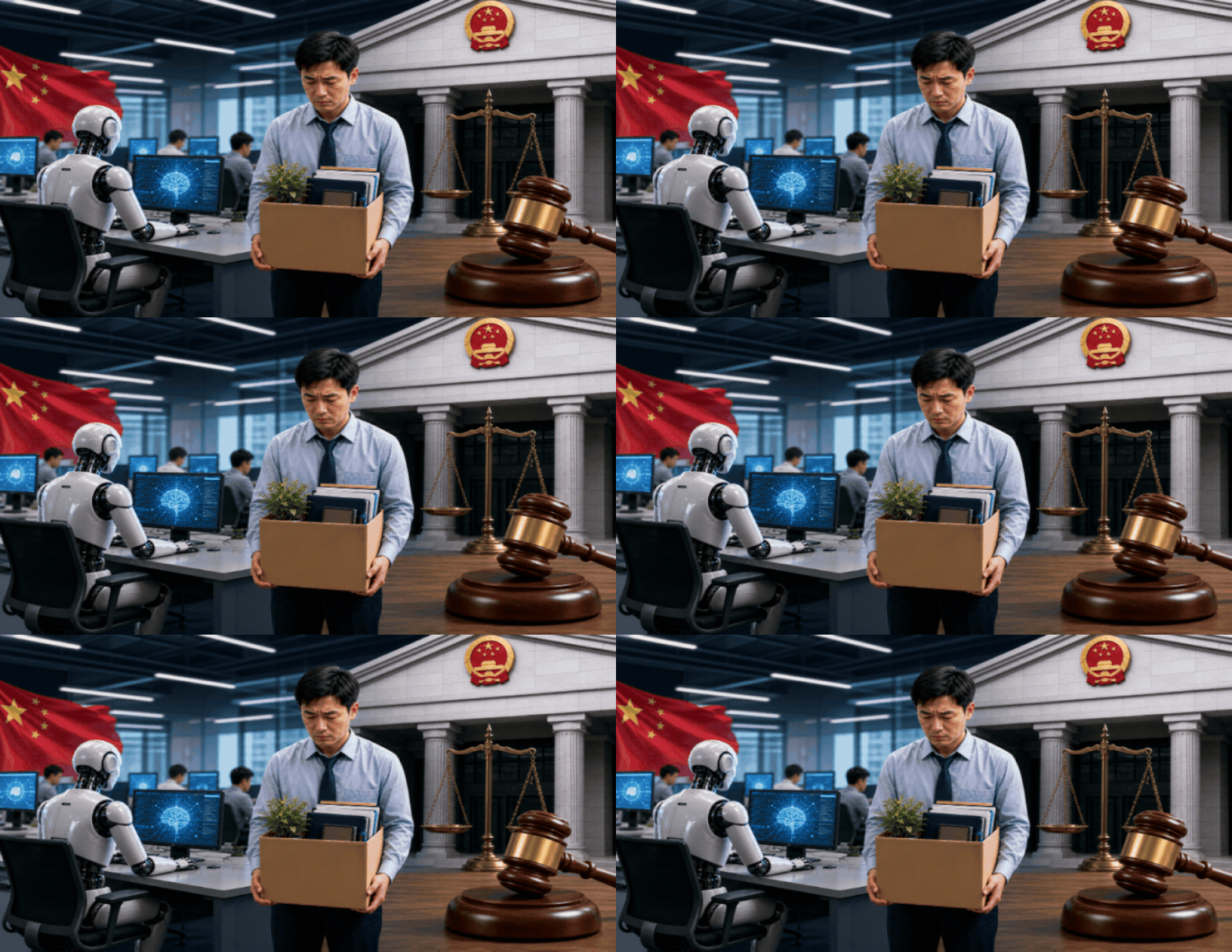

Significant Court Decision on AI Employment Practices
A recent ruling by a Chinese court has significant implications for how businesses implement artificial intelligence (AI) in their operations. The court determined that employers are prohibited from terminating employees solely to replace them with AI technologies, thereby reinforcing employee rights in the face of rapid technological advancements. This decision arose from a case involving a tech company in eastern China, where an employee was dismissed after he declined a demotion associated with the automation of his position. The Hangzhou Intermediate People's Court reviewed the situation and deemed the company's actions unlawful, as reported by a major news outlet.
The court's findings indicated that the reasons provided for the employee's termination did not align with legally acceptable criteria. "The grounds for dismissal cited by the employer did not pertain to adverse conditions such as downsizing or operational challenges, nor did they satisfy the legal requirements for rendering the employment contract 'impossible to continue,'" the court stated in its April 28 ruling. This verdict emphasizes that advancements in technology, including AI-driven automation, do not automatically justify the termination of employment contracts.
Restrictions on Employer Actions
In a related clarification regarding the same case, the court emphasized that companies cannot make unilateral decisions about their workforce based solely on technological innovations. Employers are not allowed to reduce salaries or lay off staff merely because machines or AI can perform certain tasks more effectively. This position reflects a broader legal principle that emphasizes fairness and due process, even as industries evolve digitally.
This ruling comes at a time when Chinese companies are rapidly integrating AI technologies, backed by a national initiative to excel in advanced technological fields. Concurrently, policymakers, including members of the Chinese Communist Party, are facing challenges in maintaining job security. With economic growth under strain and youth unemployment a pressing issue, authorities are keen to avert widespread job losses resulting from automation. This ruling represents an attempt to balance the promotion of innovation with the protection of employment.