
BRICS Nations Tread Cautiously on De-Dollarisation: What’s Next?
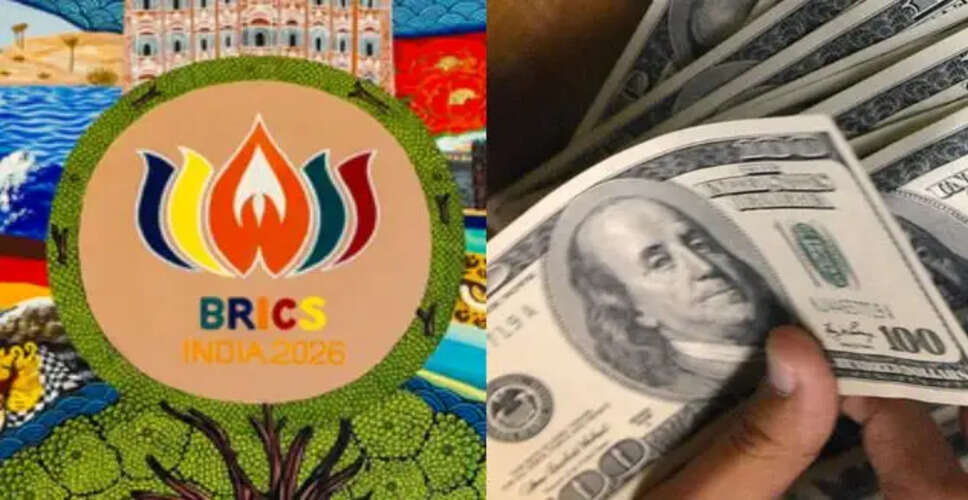

Cautious Steps Towards Financial Independence
New Delhi: Despite years of speculation regarding a challenge to the dollar's supremacy, the recent joint statement from the finance ministers and central bank governors of BRICS nations reflects a more measured approach than the bold rhetoric from some member states.
The statement does not propose a unified BRICS currency or a direct call to replace the US dollar. Instead, it emphasizes a gradual approach, focusing on interoperable payment systems, local currency settlements, and voluntary cooperation among members who prioritize their national interests.
The BRICS Payment Task Force (BPTF) has been acknowledged for its efforts in exploring practical solutions for efficient cross-border payment systems. The bloc encourages the BPTF to continue its discussions to facilitate swift, cost-effective, and secure cross-border transactions among BRICS nations.
However, remarks from Iranian President Masoud Pezeshkian and Russian President Vladimir Putin during the BRICS Business Forum highlight the ongoing significance of de-dollarisation within BRICS discussions.
Pezeshkian made a compelling argument for reducing reliance on the dollar, advocating for a more resilient trade and investment network among BRICS members and the increased use of national currencies. He pointed out that the current financial system's reliance on a few currencies makes economies susceptible to political instability.
"Expanding the use of national currencies in trade is crucial. This must be paired with the necessary tools to manage currency risks and reciprocal settlements, as the existing system is vulnerable to political shocks due to its limited currency concentration," he stated.
Ahead of the summit, Pezeshkian also suggested that BRICS financial mechanisms could enable member countries to engage economically with reduced dependence on the dollar, specifically mentioning the New Development Bank's role in facilitating transactions without relying on the US currency.
For Iran, this issue is particularly pressing, as the country faces extensive US sanctions. Tehran views the increased use of national currencies and alternative payment systems as a means to mitigate the impact of financial restrictions imposed by the dollar-centric system.
Putin's address at the Forum echoed similar sentiments, emphasizing the need for BRICS to establish a "new, sustainable platform for global growth" in light of sanctions and other restrictive measures affecting international trade.
Russia is particularly motivated to create financial channels outside of Western systems due to the significant limitations imposed on its access to dollar and euro-based financial networks.
The joint statement from the BRICS finance ministers and central bank governors in Mumbai acknowledged the progress made in studying cross-border payment interoperability and the promotion of trade settlements using local currencies, while recognizing that a one-size-fits-all solution does not exist.
The statement also expressed support for the New Development Bank's ongoing efforts to mobilize resources, enhance local currency financing, and foster innovation to support sustainable growth in member countries.
Challenges of De-Dollarisation
DE-DOLLARISATION: A COMPLEX TASK
Transitioning away from the dollar involves settling more bilateral trade in national currencies, enhancing payment systems, minimizing intermediaries in cross-border transactions, and increasing local currency financing through the New Development Bank. It also requires strengthening BRICS financial safety nets and developing instruments to attract private capital.
The joint statement explicitly calls for the New Development Bank to broaden local currency financing and diversify its funding sources. Additionally, it supports the BRICS Multilateral Guarantees initiative aimed at improving project creditworthiness and attracting private investment.
However, completely replacing the dollar poses significant challenges. The dollar's dominance is supported by the depth and liquidity of US financial markets, its pivotal role in global trade, and the vast size of dollar-denominated markets.
BRICS nations also encounter their own hurdles. Their currencies are at varying stages of international acceptance, many are not fully convertible, and trade among members is often imbalanced.
These imbalances create a fundamental issue for local currency trade: a country that accumulates another member's currency needs a viable option for investment or expenditure. Without sufficiently deep markets, these transactions may ultimately necessitate conversion into a third currency.
India has advocated for increased use of local currencies and more efficient cross-border payment systems. During the BRICS Business Forum, Commerce and Industry Minister Piyush Goyal emphasized the need for BRICS countries to connect their payment systems and boost trade in local currencies, citing India's Unified Payments Interface as a model for enhancing cross-border connectivity.