
Airlines Face Challenges Amid Rising Jet Fuel Prices
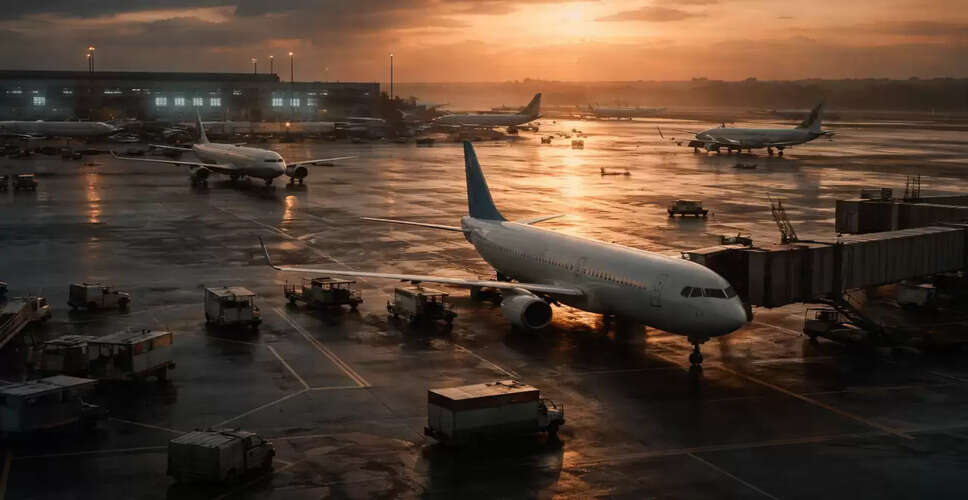

Global Airlines Adjust Operations Due to Fuel Price Surge
Airlines around the globe are bracing for potential disruptions as they react to a significant increase in jet fuel costs. Many carriers are cutting back on flight schedules and grounding planes to cope with escalating operational expenses, raising alarms about the stability of future travel seasons. Recently, KLM announced it would significantly reduce its network, canceling 80 round-trip flights at Amsterdam’s Schiphol Airport over the next month. This decision mirrors actions taken by other major airlines such as United Airlines, Lufthansa, and Cathay Pacific, which have also scaled back services to alleviate financial pressures, as reported by a leading news outlet.
Data from aviation analytics firm Cirium indicates that global flight capacity for May has decreased by approximately 3 percent. Almost all of the world's top 20 airlines have curtailed operations, suggesting a collective retreat within the industry. Analysts express concerns that the situation may deteriorate further before it improves. Richard Evans, a senior consultant at Cirium, stated, “It seems highly probable that additional reductions are forthcoming,” pointing to increasing uncertainty in aviation planning.
The initial turmoil, which was primarily focused in the Middle East due to geopolitical issues, has now expanded globally, jeopardizing peak summer travel demand. Ongoing challenges with oil supply routes, particularly around the Strait of Hormuz, continue to impact industry sentiment. Delta Air Lines CEO Ed Bastian encapsulated the pressure, noting, “Any flights that are marginal and not yielding the desired returns will likely be reassessed,” adding, “This will be a significant test for the industry,” according to the same news source.
Concerns Over Fuel Supply Intensify
In addition to rising prices, airlines are facing worries regarding the availability of jet fuel. The International Energy Agency has cautioned that Europe might have only “about six weeks” of supply left. Several airlines, including Ryanair and Virgin Atlantic, have expressed cautious forecasts, with visibility on fuel supply extending only to mid-May. The European Union has also raised alarms about potential shortages and is preparing contingency plans should supply disruptions escalate. Meanwhile, a temporary reprieve occurred when Iran announced that the Strait of Hormuz remains accessible, resulting in a decline in crude oil prices. However, market analysts warn that the situation remains precarious.
Airlines Shift Focus to Financial Stability
Carriers are increasingly prioritizing financial sustainability over growth. Lufthansa has reduced capacity, retired older aircraft, and modified operations throughout its network. Other airlines, such as Air Canada, Qantas, and Cathay Pacific, have also scaled back routes or flight frequencies. Some operators, particularly in Europe, benefit from fuel hedging strategies, while many US and Asian airlines are directly exposed to fluctuating fuel costs. Consequently, cancellations and route suspensions are becoming more frequent across both long-haul and regional networks.