
Air India Express Maintains Resilience Amid Geopolitical Challenges
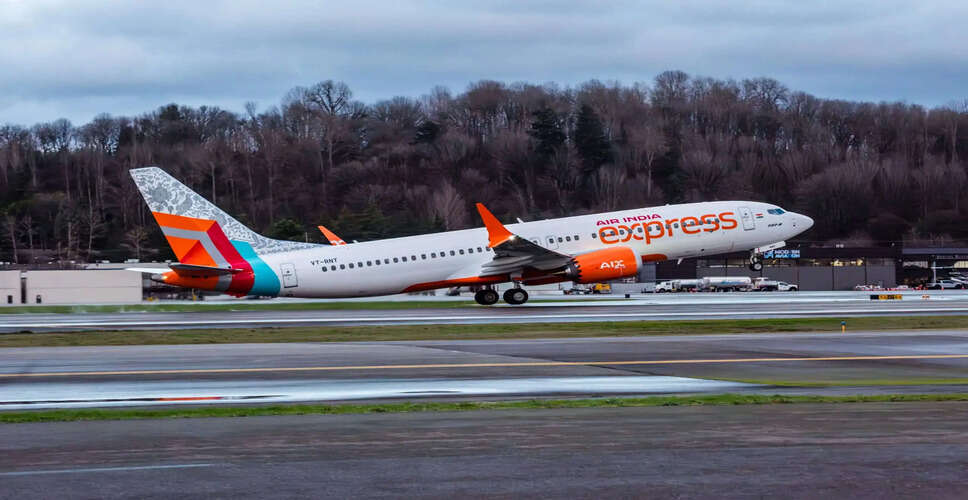

Air India Express Chairman Discusses Travel Demand and Operational Challenges
Nipun Aggarwal, the Chairman of Air India Express, addressed inquiries regarding the ongoing situation in West Asia during a recent event. He noted that despite geopolitical tensions, the demand for travel between India and the Middle East has remained strong. However, he highlighted that the primary challenge for the airline stems from operational restrictions due to airspace closures rather than a decline in passenger demand.
In response to questions about the evolving circumstances in West Asia, Aggarwal stated that the airline has continued its operations wherever feasible. He remarked, 'This situation is dynamic and has been evolving since the start of this financial year, particularly from March and April. We are constantly assessing how to navigate these challenges.'
Aggarwal emphasized that developments in the Gulf region significantly impact the airline's operations, yet the demand remains robust. 'Given our presence in the region, we are affected in various ways. However, our main limitation is our ability to operate flights into and out of the region, as demand remains high due to a large Indian diaspora,' he explained.
He further mentioned that Air India Express did not halt operations even when oil prices surged, focusing instead on operational viability. 'Even when oil prices exceeded $200, we maintained full operations because flights to the Middle East remained profitable, and demand was strong. Our only limitation was our capacity to fly,' he stated.
Aggarwal added that the airline is closely monitoring developments in collaboration with airports and local authorities to determine operational capabilities. 'As long as airports and airspace remain open, we will deploy our capacity. That is our only constraint,' he noted. He acknowledged that while occasional disruptions may occur, the airline has a robust operational framework that continuously assesses risks and adapts accordingly.
During the event in Abu Dhabi, Aggarwal mentioned that the airline has largely restored capacity that was temporarily reduced during the crisis. 'Initially, we faced multiple challenges, including rising oil prices, closed airspace, and reduced traffic, which extended flight times and increased operational demands. However, we are now restoring our network, with Middle East operations already back to 90% capacity,' he said.
He projected that by October, operations would return to pre-war levels unless unforeseen escalations occur. Aggarwal acknowledged that while higher oil prices have increased costs, airlines struggle to fully transfer these costs to passengers. 'Airfares have risen, but they are still not sufficient to cover the complete impact of rising oil prices. The industry is highly price-sensitive, making it challenging to pass on these costs to consumers,' he explained.
Despite external pressures, Aggarwal affirmed that the airline's long-term growth strategy remains intact. 'We are progressing with our transformation program as planned,' he stated, highlighting advancements in fleet modernization, maintenance, training infrastructure, and rebranding efforts, although aircraft deliveries have faced delays due to global supply chain issues.
Air India Group anticipates receiving 50 to 60 aircraft annually over the next 12 to 18 months, maintaining its expansion and transformation trajectory despite geopolitical tensions and oil price fluctuations. 'We expect to receive over 50 aircraft by the end of next year, which aligns with our plans,' Aggarwal confirmed.
He also noted improvements in Boeing's production, with deliveries of the Boeing 787-9 already in progress, and the airline continuing to receive Boeing 737 MAX 8 aircraft. 'We will be among the first to receive the MAX 10, which is in advanced certification stages and expected to begin deliveries early next year. Overall, we are on track to receive 50 to 60 aircraft in the coming months,' he concluded.