
Agra's Petha Industry Faces Crisis Amid LPG Shortage
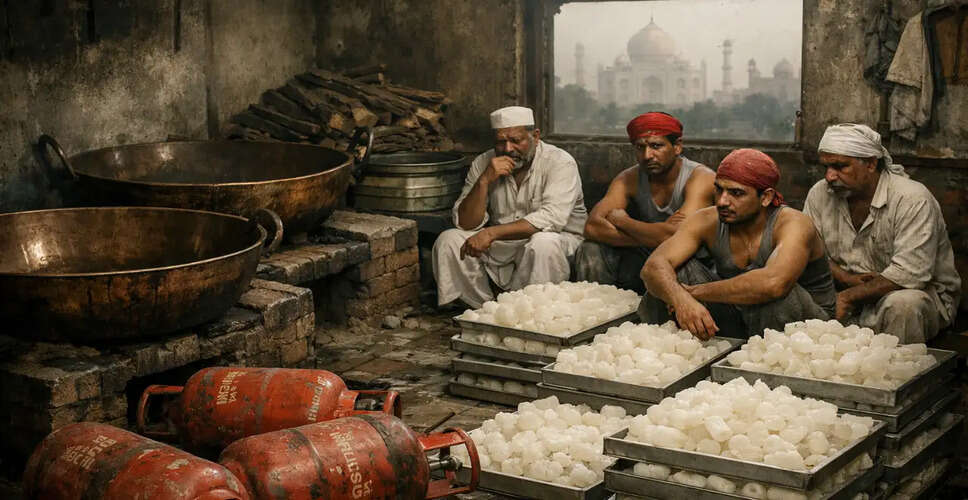
Agra's Petha Industry in Turmoil
The renowned petha industry in Agra, a vital part of the city's food culture, is currently experiencing significant challenges due to a lack of commercial LPG cylinders. This shortage has led many manufacturing units to cease operations, leaving producers in a state of distress as they seek solutions amidst ongoing uncertainty regarding gas supplies. Numerous petha manufacturers have either completely halted their production or are struggling to operate with dwindling gas reserves. This crisis is exerting tremendous pressure on a traditional industry that has supported countless families and has been a key aspect of Agra's cultural heritage for generations.
Production Halts for Many Manufacturers
Sweet producers are reporting that the LPG supply shortage is severely impacting their production capabilities. Kilns that typically function continuously are now either inactive or operating at significantly reduced levels. Rajesh Agarwal, president of the Shaheed Bhagat Singh Petha Kutir Association, expressed growing concerns among manufacturers. He stated, "The production of petha has been severely impacted. Some units have completely shut down, while others are trying to operate with the limited cylinders they have left. If the supply is not restored soon, the remaining units may also be forced to close." Agarwal also mentioned that there has been no clear communication regarding when regular LPG supplies might resume, which is heightening anxiety within the industry.
Environmental Regulations Limit Alternatives
This crisis is particularly challenging for Agra's petha producers, as they cannot easily transition to alternative fuels. The city is located within the Taj Trapezium Zone (TTZ), an environmentally sensitive area surrounding the Taj Mahal, where the use of fuels such as wood and coal is prohibited. Consequently, LPG is the only legally allowed energy source for most sweet production units. Without it, traditional cooking kilns cannot function, leading to a complete halt in production.
A Heritage Industry Under Threat
The scale of the petha industry underscores the potential consequences of this crisis. Approximately 70 large gas-powered production units are situated in Agra's Noori Darwaza area, collectively generating petha worth around Rs 20 lakh daily. In addition to these larger operations, over 500 smaller units throughout the city rely on this trade for their livelihoods.
Urgent Call for Government Action
Industry representatives have reached out to district officials, urging them to swiftly address the LPG supply disruption to avert further damage to the sector. Authorities have reportedly assured traders that the situation will be resolved, although no specific timeline has been provided.
Officials Deny LPG Shortage Claims
Despite the concerns raised by traders, the local administration has refuted claims of a gas shortage. District Magistrate Arvind Mallappa Bangari stated that LPG supply in the district remains stable and suggested that rumors of a shortage are being intentionally spread. He warned that strict measures could be taken against those responsible for disseminating misinformation.