
Accelerating India's Electric Vehicle Transition: Insights from EKA Mobility
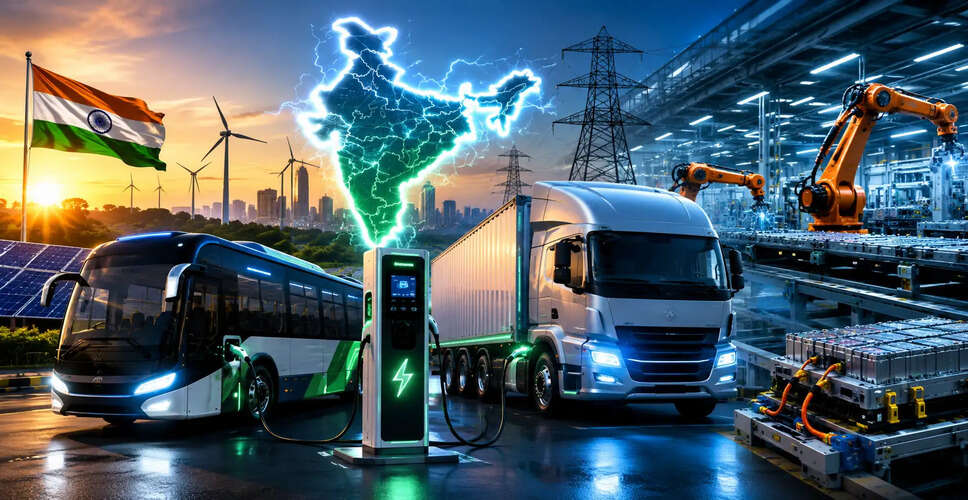

Transforming India's EV Landscape
In a recent discussion with a digital news platform, Rohit Shrivastava, the Chief Growth Officer of EKA Mobility, elaborated on how India can expedite its journey towards energy independence. He highlighted that the shift towards electric vehicles (EVs) is no longer a distant goal; it is already underway. In June, electric vehicles accounted for over twelve percent of all vehicle sales in India for the first time. The market for electric two-wheelers has reached double-digit penetration, while three-wheelers are predominantly electric. Additionally, electric passenger car sales have nearly doubled compared to the previous year, culminating in approximately 2.45 million EVs sold by the end of FY26. The focus now shifts to who will benefit from this transition, with government policies and manufacturing playing crucial roles.
The Indian government is actively promoting EV adoption through various initiatives. Two key factors will accelerate this transition: first, the establishment of long-term policies that provide stable roadmaps for demand incentives, emission standards, and public procurement, allowing manufacturers to plan for the future. Second, fostering domestic ownership of essential technologies such as battery cells, power electronics, and vehicle software will enhance value creation, exports, and scalability.
Regarding Delhi's new EV policy, which has an allocation of around Rs 15,000 crore, Shrivastava expressed appreciation for its proactive approach. The policy mandates that only electric three-wheelers and light goods vehicles will be registered starting January 2027, followed by electric two-wheelers from April 2028. This shift from persuasion to certainty is expected to stimulate demand significantly, as evidenced by global examples where clear timelines have driven manufacturers to invest and innovate.
At the national level, the government has introduced several initiatives to bolster domestic manufacturing, battery production, and the EV supply chain. At the state level, the focus should be on creating a supportive ecosystem that includes industrial infrastructure, reliable power sources, charging networks, expedited approvals, a skilled workforce, and R&D support. These combined efforts will not only enhance EV adoption but also attract investments, generate employment, and establish a competitive EV manufacturing landscape.
When asked how EKA Mobility can contribute to India's EV transition, Shrivastava emphasized the importance of electrifying buses, trucks, and last-mile commercial vehicles. Heavy-duty vehicles contribute significantly to global CO₂ emissions, making their electrification a high-impact opportunity for decarbonization. Initiatives like PM-eBus Sewa and PM E-DRIVE are facilitating the introduction of over 24,000 electric buses in Indian cities, positioning public transport as a testing ground for domestic EV technology.
EKA's strategy is built on three pillars: first, manufacturing capabilities with facilities in Pune and Pithampur aimed at producing over 10,000 buses, 25,000 small commercial vehicles, and 5,000 trucks annually. Second, technology ownership through the EKA Connect platform, which offers real-time tracking and predictive diagnostics to lower total ownership costs. Third, expanding a service and dealership network to over 200 locations by FY27, along with partnerships for charging infrastructure and training programs for technicians and drivers.
In addressing policymakers, Shrivastava urged a focus on scaling manufacturing and technology in the next five years. He noted the impressive policy framework already in place, including the PLI-Auto scheme and the ACC battery program. However, the emphasis must now shift to swift execution. He pointed out that while battery cell production has commenced, challenges remain, such as reliance on imported materials and the need for robust infrastructure.
To overcome these challenges, Shrivastava identified the importance of securing a resilient supply chain for critical minerals and enhancing the quality of charging infrastructure. Additionally, addressing the cost of capital is crucial, as financing remains a barrier for many potential EV buyers. The government has initiated steps to strengthen resource security, including acquiring lithium blocks and promoting recycling of critical minerals.
To accelerate progress, Shrivastava suggested focusing on circularity in the industry, where end-of-life batteries can be recycled to recover valuable materials for new production. He also advocated for financing reforms to lower interest rates and down payments for EV loans, making electric vehicles more accessible. Battery swapping initiatives should be encouraged to separate battery costs from vehicle costs, making EVs more affordable for gig workers and small operators. With the right policies and local technology development, India can scale its EV production and meet global demand.