
What Makes the Rath Yatra in Kashi a Must-See Spiritual Event?
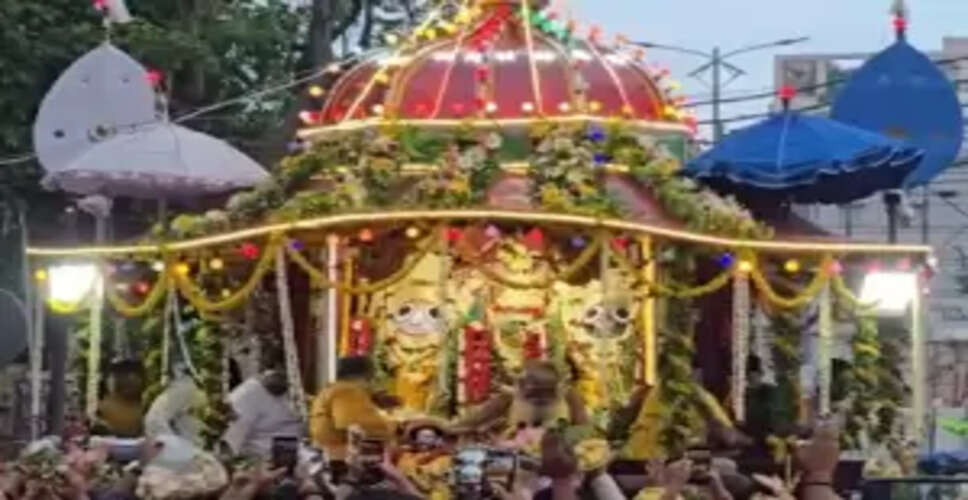
A Grand Celebration of Faith in Kashi
New Delhi: The sacred city of Kashi in Uttar Pradesh came alive with devotion as the magnificent Rath Yatra of Lord Jagannath was celebrated with great enthusiasm on Friday.
This age-old tradition attracts thousands of devotees from all over the nation, who gather to receive blessings from Lord Jagannath, along with his siblings Balabhadra and Subhadra, as they journey through the streets of Varanasi in a ceremonial chariot procession.
The event is one of the most important spiritual gatherings in the region, recognized as Kashi's first 'Lakkha Mela,' a fair that draws countless worshippers.
Spanning three days, this religious festival holds significant importance in Varanasi's spiritual calendar. As the intricately decorated chariots traverse the historic streets, the air fills with chants of 'Jai Jagannath,' the rhythmic sounds of drums, conch shells, and the melodious bhajans sung by the devotees.
According to Hindu tradition, after a ritual bath on Jyeshtha Purnima, Lord Jagannath is believed to enter a phase of rest and recuperation. The chief priest of the Jagannath Temple in Kashi, Pandit Radheshyam Pandey, elaborated, 'Following the bath on Jyeshtha Purnima, Lord Jagannath is thought to be unwell for 14 days. On Amavasya, once he recovers, he embarks on a tour of the city to bless his devotees.'
A devotee shared insights into the traditional healing practices observed during this time, stating, 'During the first two days, a general herbal decoction is administered, followed by a special parwal decoction for the next 14 days. After this, he is believed to recover.'
Devotees from distant places filled the streets of Varanasi, offering basil leaves and sweets, particularly the local treat nankhatai, as offerings to the deity. Many were seen dancing to devotional tunes, waving saffron flags, and participating in 'aartis' as the divine procession made its way through the city.
The Rath Yatra in Kashi is a remarkable spiritual event, showcasing the profound faith of millions.