
Majuli's Traditional Mask Art Celebrated at National Institute of Design
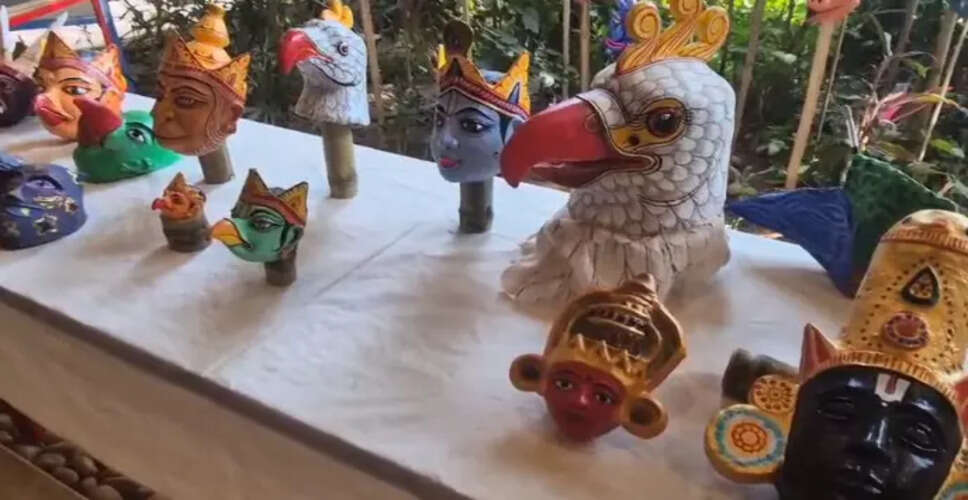
Cultural Heritage of Assam Shines at NID
Jorhat, Jan 17: Assam's rich cultural heritage received a significant boost as the traditional mask-making art from Majuli was honored at the esteemed National Institute of Design (NID) in Ahmedabad.
Mask crafting is a vital aspect of the Sattriya culture, which was pioneered by Mahapurush Srimanta Sankardeva.
This notable cultural exchange in Ahmedabad has successfully introduced the ancient craftsmanship of Majuli to one of India's leading design institutions, marking a crucial step in the preservation and modernization of traditional art forms.
Khagen Goswami, a distinguished mask artist from Sri Sri Samuguri Satra, along with his assistant Pranab Bora, is conducting a specialized workshop at NID.
The workshop has attracted around 25 eager students from NID's Bengaluru and Gandhinagar campuses.
Over the course of an intensive 12-day program, students are being immersed in the philosophy, techniques, and cultural importance of Majuli's mask-making tradition, which is essential to Ankiya Naat and other Sattriya performances.
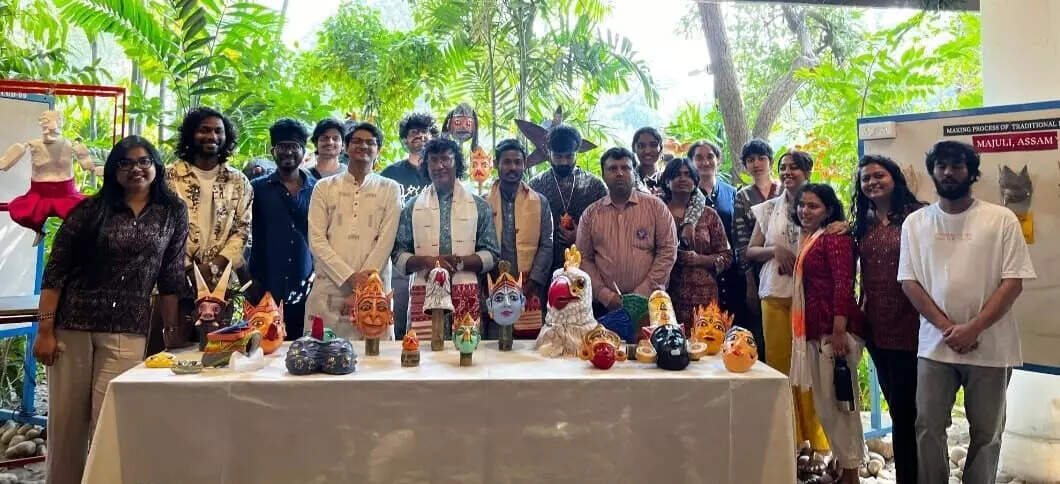
Students of NID with Khagen Goswami and colorful masks (Image)
The sessions emphasize not only the crafting techniques involving clay, bamboo, and fabric but also the spiritual and narrative aspects of the masks.
Khagen Goswami expressed, “The atmosphere here is incredibly supportive, and we feel privileged to showcase Assam's heritage at such a prestigious institution.”
“We are delighted to continue the legacy of Srimanta Sankardeva. Throughout these 12 days, the students have collaborated closely with us, designing and producing masks while gaining insights into the tradition behind them,” he added.
He noted the students' curiosity and creativity as encouraging, stating, “They are attempting to merge traditional styles with their own design perspectives while honoring the fundamental values of the art.”
The inclusion of Majuli's mask art at NID is seen as a recognition of the art form's aesthetic, educational, and cultural significance on a national scale.
This initiative also underscores the increasing interest among young designers in indigenous art practices and the potential for traditional knowledge systems to influence contemporary design education.