
Exploring Muslim Representation in Bollywood: Insights from Nadira Khatun's New Book
Understanding Muslim Identity in Bollywood
In her book, Postcolonial Bollywood and Muslim Identity: Production, Representation, and Reception, Nadira Khatun discusses how Bollywood has often depicted Muslims through a biased lens, neglecting their roles in significant socio-political events in India.
Khatun points out that Hindi cinema tends to portray Muslims in a simplified and generalized manner.
She notes, “Muslims are frequently linked to specific cultural markers like the Urdu language, biryani, and traditional attire such as the skull cap and burqa. However, the reality is that Muslims across India have diverse diets, languages, and clothing styles.”
The book, published by Oxford University Press, delves into the various representations of Muslims in Hindi films over the years. From the 1940s to the 1970s, films often depicted Muslims as rulers or aristocrats, which, while seemingly positive, created a distorted image of Indian Muslims at that time, according to Khatun.
In later decades, portrayals shifted, with Muslim characters frequently depicted as gangsters, terrorists, or spies. Khatun's work, which expands on her doctoral research, also analyzes modern films featuring Muslim characters, including My Name is Khan (2010), Dear Zindagi (2016), and Gully Boy (2019).
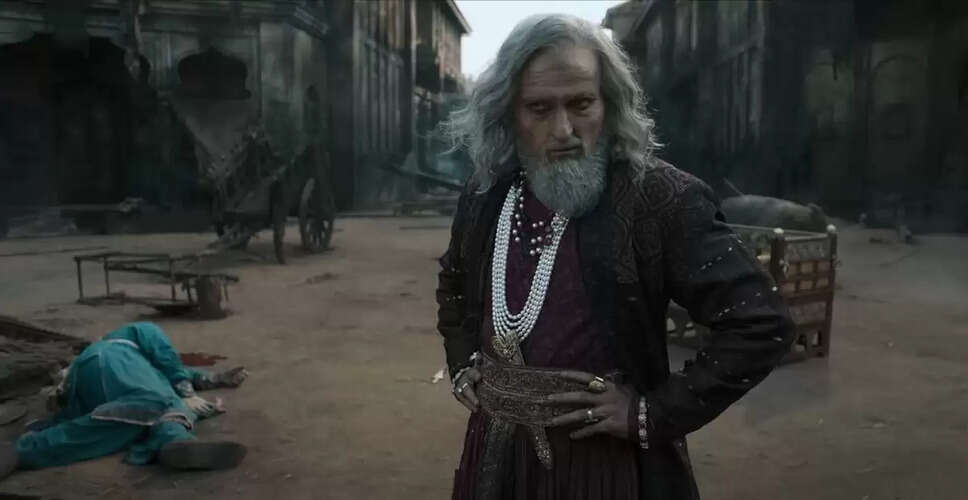
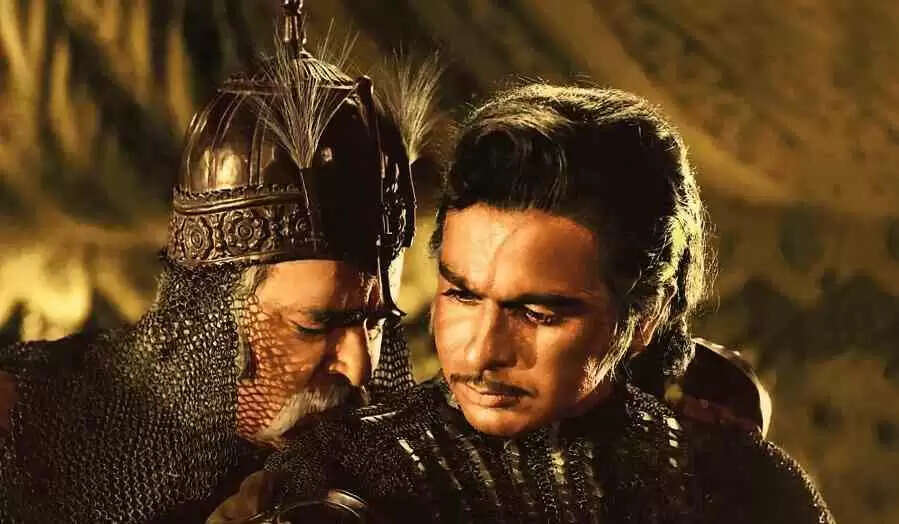
She contrasts the renewed interest in historical narratives with older films like Mughal-e-Azam (1960) and Jodhaa Akbar (2008), noting that recent films such as Samrat Prithviraj (2022) and Chhavva (2025) depict Muslim rulers as foreign oppressors.
Khatun argues that Bollywood has responded to selective historical moments, contributing to a narrative that supports Hindutva ideology through its portrayal of Muslims.
In an interview, Khatun shared her motivations for writing the book and her perspective on the evolution of Muslim representation in cinema.
What inspired you to write Postcolonial Bollywood and Muslim Identity?
Having been told multiple times that I don’t fit the stereotype of a Muslim, I realized Bollywood significantly influences public perceptions of Muslims.
Growing up in the 1990s, I noticed that while the Khans were major stars, they often played Hindu roles, contrasting with the marginalization of my own community. This personal experience shaped my choice of topic.
How have Muslims been represented in cinema over the years?
Historically, Muslims were often exoticized or villainized, rarely depicted as everyday citizens with normal lives.
From the 1940s to the 1960s, films featured Muslim kings and nobles, while later decades saw the emergence of Muslim social films that highlighted Islamicate culture.
Post-1990s, especially after the Babri Masjid demolition, the portrayal of Muslims shifted to include terrorists and gangsters as primary antagonists.
Films based on real incidents, such as terrorist attacks, are often perceived as more credible. Muslim protagonists are frequently depicted in contexts of oppression, as seen in Secret Superstar.
In Lipstick Under My Burkha, for instance, a Muslim character struggles with family pressures, while films like Darlings perpetuate the stereotype of violent Muslim men. However, characters like Safeena in Gully Boy challenge these norms by being assertive and independent.
How do Muslim characters fit into patriotic narratives?
Muslim characters often need to demonstrate their loyalty to the nation, even in films like Iqbal. This suggests that to be seen as a good Muslim, one must prove their nationalism.
Recent trends include supernatural elements linked to Islamic themes, where women are portrayed as oppressed and needing external forces to gain power.
Films like Gully Boy and Mulk often feature external saviors, reinforcing the notion that Muslims are secondary characters in their own narratives.
Have you found positive examples of representation?
While Bollywood has a reputation for being inclusive, this is not universally true across Indian cinema. For instance, Bengali films often overlook Muslim narratives.
There are instances where Muslims are depicted fairly, not overtly religious, as seen in films like Zindagi Na Milegi Dobara and Dear Zindagi, where Muslim characters are relatable and not defined solely by their faith.
Jehangir Khan in Dear Zindagi is portrayed primarily as a therapist, not as a Muslim, which allows for a more nuanced representation.
However, contemporary films lack the critical engagement seen in the works of directors like Saeed Mirza and MS Sathyu, who addressed pressing socio-political issues of their time.
How does the current socio-political climate affect Muslim representation in films?
The film industry sees fewer Muslim filmmakers and writers, with many narratives shaped by non-Muslims. Exceptions include directors like Zoya Akhtar and Kabir Khan.
Kabir Khan's New York attempts to address the roots of terrorism without demonizing Muslims, while films like Padmaavat and Chhaava often depict Muslims as antagonists.
Older historical films like Mughal-e-Azam romanticize Muslim rulers, which can alienate contemporary audiences. The last positive portrayal of a Mughal ruler was in Jodhaa Akbar (2008).
Addressing social issues in films could provide insights into broader societal dynamics, especially in light of the polarizing narratives seen in films like Chhaava.
Ultimately, cinema reflects societal attitudes, and while it plays a role in shaping perceptions, it is part of a larger political context.
Also read:
Muslim stereotyping in Hindi films: ‘We cannot allow ourselves to forget what constitutes us’
‘Salim Langde Pe Mat Ro’ revisited: A timeless tale of a small-time thug dreaming of the big league
‘Chhaava’ review: A brutally violent version of Maratha history