Rising Tensions: US-Iran Conflict Escalates Over Strait of Hormuz
Escalation of US-Iran Relations
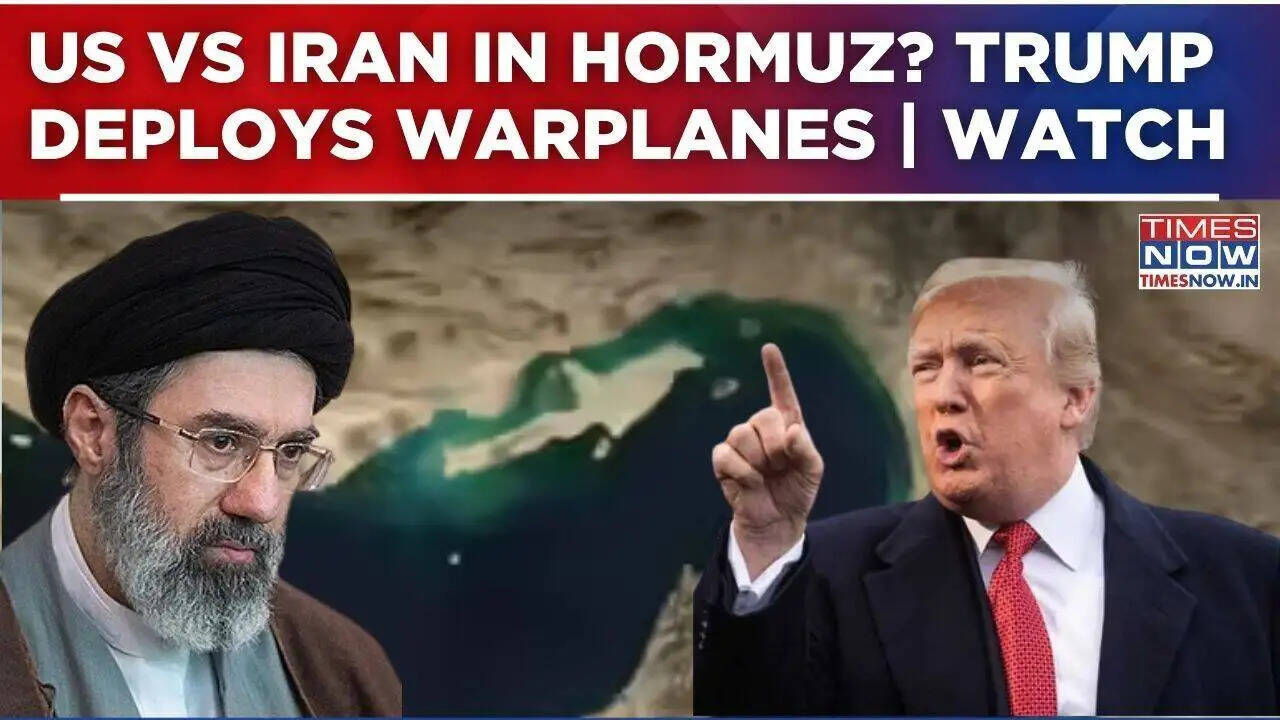
The ongoing tensions between the United States and Iran have intensified, with both nations exchanging severe warnings and hinting at potential strikes on vital infrastructure. Central to this latest conflict is a 48-hour ultimatum from Donald Trump, demanding Iran to reopen the Strait of Hormuz.
What Sparked the Recent Tensions?
The situation escalated following US and Israeli airstrikes on Iran on February 28, which resulted in the death of former supreme leader Ayatollah Ali Khamenei. In retaliation, Iran has effectively blocked the Strait of Hormuz. Under international law, attacks on essential civilian infrastructure are prohibited, and any collateral damage must not be excessive compared to the military advantage gained. Trump has threatened to "obliterate" Iran's power facilities if the strait is not reopened within the specified timeframe.
Iran's Reaction to US Threats
In response, Iranian officials have issued counter-threats, asserting that any attack on their energy infrastructure would provoke retaliation throughout the region. Colonel Ebrahim Zolfaqari, a spokesperson for Iran's military command, indicated that facilities related to fuel, energy, and desalination linked to the US and its allies could be targeted. Desalination plants are crucial for water supply in parts of the Middle East, especially in Israel and Gulf nations. Iran's Parliament Speaker, Mohammad Baqer Qalibaf, stated on social media that an attack on Iran's power plants would lead to the irreversible destruction of critical infrastructure across the region.
The potential for reciprocal attacks on energy infrastructure poses a significant risk of exacerbating what the International Energy Agency has termed "the largest supply disruption in the history of the global oil market." The average gas price in the U.S. reached $3.942 over the weekend, with Brent crude prices soaring nearly 50% to $112 a barrel since the conflict began.
Importance of the Strait of Hormuz
This narrow passage in the Persian Gulf is responsible for nearly 20% of the world's oil supply, but it has been largely inaccessible to tankers since Iran began targeting shipping at the onset of the conflict. Any disruption in this area has immediate global repercussions. Following the recent escalation, oil prices have surged, and shipping operations have been hindered due to security concerns. Even when passage is technically feasible, analysts note that insurers are often reluctant to cover vessels in active conflict zones.
US Options Moving Forward
Washington officials have suggested that further escalation remains a possibility. Treasury Secretary Scott Bessent mentioned that the administration is keeping "all options" available to ensure the strait is reopened, emphasizing that escalation and de-escalation can coexist. However, some analysts express skepticism about whether military action alone can achieve this objective. Ross Harrison from the Middle East Institute noted that the US might have "limited options," arguing that even sustained military strikes may not restore confidence in shipping routes, as vessels are unlikely to operate without insurance in an active war zone.
Will Iran Concede?
Experts believe that Iran is unlikely to back down under pressure. Aniseh Bassiri Tabrizi from Chatham House indicated that Iran may aim to increase the conflict's costs as a deterrent. She noted that the threats from the US are unlikely to have a significant impact, as Iran seems focused on enhancing its negotiating position rather than retreating. Iranian officials have also signaled a shift in military strategy from defensive to offensive tactics. As the conflict enters its fourth week, Iran has targeted a joint US-UK base in the Indian Ocean and intensified its strikes on Israel. Nuclear facilities in both Iran and Israel have also been attacked, although the International Atomic Energy Agency has reported no abnormal radiation levels detected. The risk of attacks on civilian infrastructure, including energy and water systems, is now a major concern.
Future Developments
The next steps will largely depend on whether either side is willing to de-escalate the current situation. Analysts suggest that the US may need to explore an "off-ramp" to prevent a prolonged conflict. Ali Abdollahi Aliabadi, commander of Iran's Khatam al-Anbiya Central Headquarters, stated that the military doctrine has shifted from defensive to offensive, with adjustments made to battlefield tactics. He emphasized that the war's outcome relies on the determination of both sides, asserting that there is a unified resolve among the Iranian people, fighters, and leadership to continue until the aggressor is punished, damages are compensated, and future deterrence is established.