Mass Funeral for Former Iranian Supreme Leader Begins Amid Controversy
Funeral Process for Ayatollah Ali Khamenei Commences
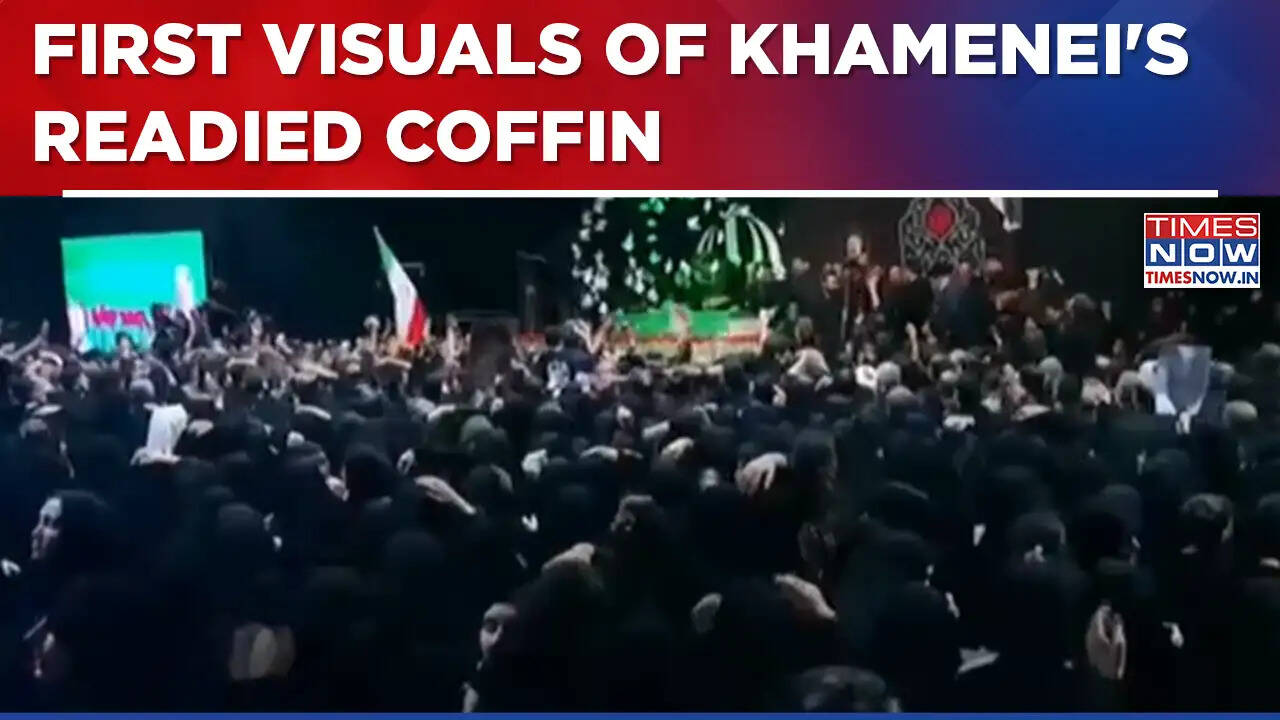
The week-long memorial for the late Ayatollah Ali Khamenei, who lost his life in a joint US-Israel operation on February 28, has commenced in Tehran. The event is attended by clerics, officials, foreign dignitaries, and numerous mourners paying their respects. As over a hundred days have passed since his death, questions arise regarding the delay in the funeral and the preservation of his remains.
Among those being honored are Khamenei's son-in-law, his eldest daughter, a 14-month-old granddaughter, and the spouse of Iran’s new Supreme Leader, Ayatollah Mojtaba Khamenei.
Preservation of Khamenei's Remains
How Late Ayatollah Ali Khamenei's Body Was Preserved
The Iranian government has not disclosed details regarding the preservation of Khamenei's body over the past four months. An official stated, "The bodies were protected with utmost respect and in compliance with religious and legal standards." Iman Attarzadeh, spokesperson for the Special Headquarters for the Funeral and Burial of Ali Khamenei, confirmed that the remains were neither buried nor stored elsewhere.
Counterterrorism expert Dr. Mohammed Omar suggested that Khamenei's body was likely kept in refrigerated storage rather than embalmed, as Islamic law prohibits chemical embalming. He noted that Shia law permits delayed burials under exceptional circumstances, and obtaining a clerical exemption for a supreme leader is relatively straightforward.
Funeral Timing and Political Context
Khamenei's Funeral Comes As Interim Deal Is Challenged
The funeral was postponed several times due to security concerns. It coincides with a recent interim peace agreement between the United States and Iran, which established a 60-day period for negotiating a final resolution to the ongoing conflict, including discussions on Iran’s nuclear ambitions and the strategic Strait of Hormuz.
Technical discussions began in Qatar this week but have been hindered by significant disagreements and recent hostilities between the US and Iran regarding the future of the Strait of Hormuz. Notably, Iran has paused negotiations to focus on Khamenei's funeral.
Tributes from Iranian Leadership
Iran's Three Power Centres Unite To Pay Final Tributes To Khamenei, Son Mojtaba Missing
Key Iranian figures, including military commander Mohsen Rezaee, Foreign Minister Abbas Araghchi, Chief Justice Gholamhossein Mohseni Ejei, Parliament Speaker Mohammad Bagher Ghalibaf, and President Masoud Pezeshkian, have paid their respects to the late Supreme Leader. However, Mojtaba Khamenei, the current Supreme Leader, has not been seen at the funeral, reportedly due to security issues.
Mojtaba was injured in the attack that killed his father and has remained out of the public eye since the conflict began, communicating only through written statements. His appearance at the funeral would mark his first public engagement since the war started, potentially solidifying his legitimacy both domestically and internationally. Conversely, his absence could raise concerns about his health and the governance of the country.
Details of Khamenei's Funeral Procession
What To Know About Khamenei's Funeral In Iran
The mourning period will involve Khamenei's body being transported through various cities in Iran and neighboring Iraq. His remains will be displayed at Tehran's Grand Mosalla on Saturday and Sunday, followed by a procession through Tehran on Monday before being taken to the Shiite holy city of Qom, located approximately 120 kilometers (75 miles) south. On Tuesday, Khamenei will be honored in Qom.
On Wednesday, his body will be transported to Karbala, Iraq, where the shrine of Imam Hussein is located. This day also marks the anniversary of protests against Khamenei's regime, which resulted in numerous fatalities at the hands of security forces. Finally, Khamenei will be interred in Mashhad, Iran's second-largest city, at the Imam Reza shrine, a burial site for many prominent Shiite clerics, including the late President Ebrahim Raisi, who died in a helicopter crash in 2024.