Indian Stock Market Shows Signs of Recovery Amid Easing Tensions
Market Recovery Overview
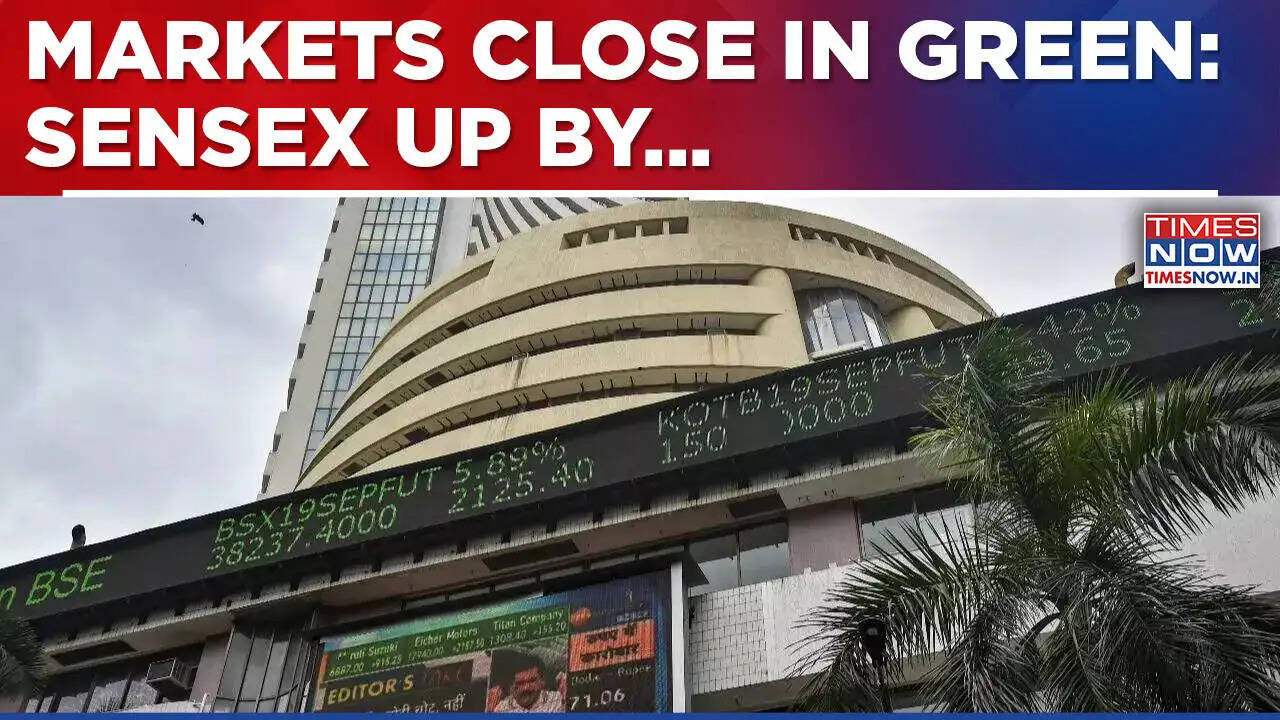
The Indian stock market is witnessing a rebound as benchmark indices have predominantly opened in positive territory this week, driven by reduced geopolitical tensions and declining crude oil prices. As of Friday morning, the market has seen an increase of over 700 points, despite ongoing fluctuations. On Friday, the Sensex surged by more than 260 points, or 0.34%, reaching 78,252.45, while the Nifty traded around 24,275.90, up 79.15 points or 0.33% in early trading. A significant factor contributing to this optimistic sentiment is the ceasefire agreement between Israel and Lebanon, coupled with hopes for renewed discussions between the US and Iran.
Weekly Market Performance
After a month of decline, both Sensex and Nifty have recorded gains over the past five days, primarily remaining in the green zone. The Indian stock market has faced volatility since the onset of the Middle-East conflict involving the US, Israel, and Iran. On Monday, the Sensex closed down by 703 points, or 0.91%, at 76,847.57, while the Nifty 50 fell by 208 points, or 0.86%, to settle at 23,842.65. The market was closed on Tuesday for Ambedkar Jayanti, and by Wednesday's close, the Sensex had gained 1,263.67 points, or 1.64%, reaching 78,111.24, with the Nifty up by 388.65 points, or 1.63%, at 24,231.30. On Thursday, the Sensex dipped by 122.56 points, or 0.16%, ending at 77,988.68, while the Nifty fell by 34.55 points, or 0.14%, to close at 24,196.75. As of around 10:22 am, the Sensex was trading at 78,313.83, up 325.15 points or 0.42%, marking a total gain of approximately 764 points for the week, indicating a reversal in trends after a turbulent month since the conflict began on February 28.
Factors Driving This Week’s Market Rally
Renewed Hopes for US-Iran Talks: The market received a boost from fresh indications that the US and Iran may resume negotiations. Pakistan has offered to facilitate another round of discussions, and US officials have suggested that progress has been made, with both parties open to a potential agreement. There are even suggestions that talks could occur soon, following a breakdown in discussions over the weekend. This prospect of peace has bolstered investor confidence.

Israel-Lebanon Ceasefire: A 10-day ceasefire between Israel and Lebanon, announced by the US President, took effect on Friday. Concurrently, Israeli Prime Minister Benjamin Netanyahu confirmed that Israeli forces would maintain their positions within an expanded security zone in southern Lebanon during the truce, further enhancing market sentiment.
Stable Oil Prices: Although oil prices have seen a slight increase, they remain comfortably below the critical $100 per barrel mark. On Friday, Brent crude was around $93, while WTI was near $93.40. Lower oil prices are beneficial for the markets, as high crude costs can lead to inflation and negatively impact economies like India that depend on imports.
Stable Rupee: The Indian rupee has maintained a steady course this week, trading near the day's high at 92.77 per dollar, compared to the previous close of 93.19. A stable currency, along with lower oil prices, has alleviated some pressure on India's import bill. However, experts caution that the situation remains fragile; any adverse news regarding global tensions could weaken the rupee again.
Positive Global Market Trends: Global stock markets have reacted favorably to the improved outlook. Asian markets, including Japan and South Korea, have shown solid gains, while Hong Kong and China also experienced upward movement. In the US, markets closed strongly, led by tech stocks, while European markets displayed mixed trends but overall maintained a positive sentiment.
Ongoing Risks
Despite the recent rally, caution is warranted. Foreign investors continue to divest from Indian stocks, indicating that confidence has not fully returned. Additionally, the uncertainty surrounding peace talks, which have previously faltered, means that markets could quickly become volatile again if developments do not proceed as hoped.