
What Does Russia's Latest Hypersonic Missile Attack Mean for Ukraine's Defense?
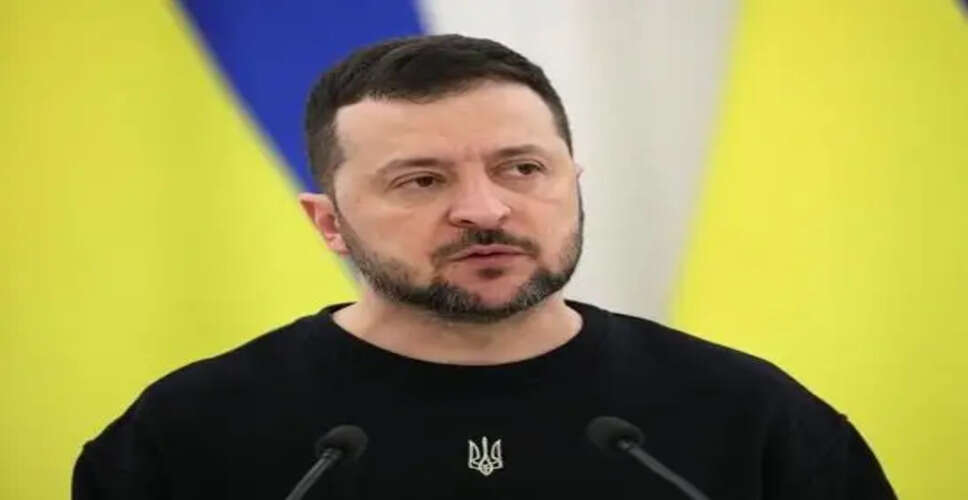

Kyiv Under Siege: A New Wave of Attacks
Kyiv: On Sunday, Ukrainian President Volodymyr Zelenskyy reported that Russia deployed the hypersonic Oreshnik ballistic missile during a significant drone and missile offensive on Kyiv, resulting in at least two fatalities. This marks the third deployment of this missile type in the ongoing conflict.
The extensive aerial bombardment caused damage to various structures throughout the capital, impacting government buildings, residential areas, schools, and markets, according to local officials. The assault left at least 83 individuals injured.
Zelenskyy noted that the Oreshnik missile struck the city of Bila Tserkva in the Kyiv region, although the specific target remains unclear.
Russia's Defence Ministry confirmed the use of the Oreshnik alongside other missile types aimed at Ukrainian military command centers, air bases, and defense industries. However, they did not disclose the exact locations of these strikes. Officials later informed Russian media that no civilian sites were targeted during the overnight operation, as reported by the state agency Tass.
In a social media statement, the ministry claimed the attacks were in retaliation for Ukrainian strikes on civilian infrastructure within Russian territory, although details were not provided.
Russian President Vladimir Putin condemned a drone strike on a college dormitory in Russian-occupied eastern Ukraine, which Moscow attributes to Kyiv, and instructed the military to propose retaliatory measures. He asserted that there were no military installations near the college.
The death toll from the Starobilsk strike has risen to 21, with search-and-rescue operations concluding, according to Russia's Ministry of Emergency Situations. Additionally, 42 individuals were reported injured from the previous night's attack. The Kremlin-backed authorities in the Luhansk region declared two days of mourning to honor the victims.
During an emergency UN Security Council meeting requested by Russia, Ukrainian Ambassador Andrii Melnyk refuted accusations of war crimes made by his Russian counterpart, labeling them as mere propaganda and asserting that the operations on May 22 were solely aimed at the Russian military apparatus.
Ukraine and its allies have consistently accused Russia of targeting civilians and critical infrastructure since the conflict began, a claim the Kremlin denies.
Oreshnik: A Game-Changer in Warfare
Russia first deployed the Oreshnik missile, which can carry multiple warheads, against the Ukrainian city of Dnipro in November 2024, followed by its second use in January in the Lviv region.
The recent combined assault involved 600 strike drones and 90 missiles launched from air, sea, and ground platforms, according to Ukraine's Air Force. Ukrainian defenses successfully intercepted and jammed 549 drones and 55 missiles, with around 19 missiles failing to reach their intended targets.
Earlier, Zelenskyy had warned of Russia's plans to utilize the Oreshnik, based on intelligence from the US and Western allies.
European allies of Kyiv condemned the Russian strikes and the use of the Oreshnik missile.
Kaja Kallas, the EU's foreign policy chief, stated that Russia, facing setbacks on the battlefield, resorts to terrorizing Ukraine with deliberate strikes on urban centers, characterizing these actions as abhorrent acts of terror aimed at civilian casualties. She mentioned that top diplomats from EU nations would convene soon to discuss increasing international pressure on Russia.
Putin previously described the Oreshnik, which translates to 'hazelnut tree' in Russian, as traveling at Mach 10, or ten times the speed of sound, and capable of demolishing underground bunkers several floors deep.
He claimed the missile behaves like a meteorite and is impervious to missile defense systems, asserting that even conventional warheads could cause devastation comparable to a nuclear strike.
As air raid sirens echoed throughout the night, smoke filled the city from the strikes, with Associated Press reporters witnessing powerful explosions near government buildings.
Ukraine's Air Defense Struggles
Zelenskyy acknowledged that not all ballistic missiles were intercepted, with most strikes targeting Kyiv, which was the primary focus of the assault.
This attack and the apparent failures in interception highlight Ukraine's ongoing shortage of air defense missiles capable of countering ballistic threats. Kyiv heavily relies on US Patriot systems for such interceptions, but the supply of interceptor missiles remains critically low, making it one of Ukraine's most pressing requests to its Western allies.
Developing a domestically produced alternative has become a priority for Ukraine's Defense Ministry, although this will require substantial time and resources.
By overwhelming Kyiv with a large number of ballistic missiles, Russia may also be attempting to deplete Ukraine's limited stockpiles ahead of what could be an even more intense wave of assaults this summer.
Residents of Kyiv Consider Leaving
Damage was reported in 50 locations across various districts of the capital, affecting residential buildings, shopping centers, and schools, as stated by Ukraine's emergency service in a Telegram update. Police department facilities were also among the damaged sites.
Fires continued to burn into the morning, complicating rescue operations as buildings collapsed from the explosions.
It was a horrific night, unlike anything experienced throughout the war, remarked Kyiv resident Svitlana Onofryichuk, 55, who had worked at the damaged market for 22 years.
I regret having to say goodbye to Kyiv now; I cannot stay here any longer. There is no possibility, she lamented. My job is gone, everything is lost, everything has burned down.
Yevhen Zosin, 74, a Kyiv resident who witnessed the attack, recounted how he rushed to save his dog upon hearing the explosion.
Another explosion followed, throwing both him and his dog back from the shockwave. We survived, but my apartment was destroyed, he said.
In the Shevchenko district of Kyiv, a five-story residential building was struck, resulting in a fire and one fatality, according to Ukraine's state emergency service.
A school building was also damaged while people were sheltering inside, as reported by Mayor Vitali Klitschko. Local authorities noted that supermarkets and warehouses across the city sustained damage.
Multiple communities throughout the Kyiv region reported damage, according to regional governor Mykola Kalashnyk.
In a separate incident, a Ukrainian drone reportedly killed a civilian in the Russian town of Grayvoron, located in the Belgorod region bordering Ukraine, local authorities announced on Sunday morning.
Russia's Defence Ministry claimed its forces intercepted or jammed 33 Ukrainian drones overnight, including over the Moscow region and Russian-occupied Crimea.