
West Bengal's Electoral Roll Revision Sparks Political Tensions Ahead of 2026 Elections
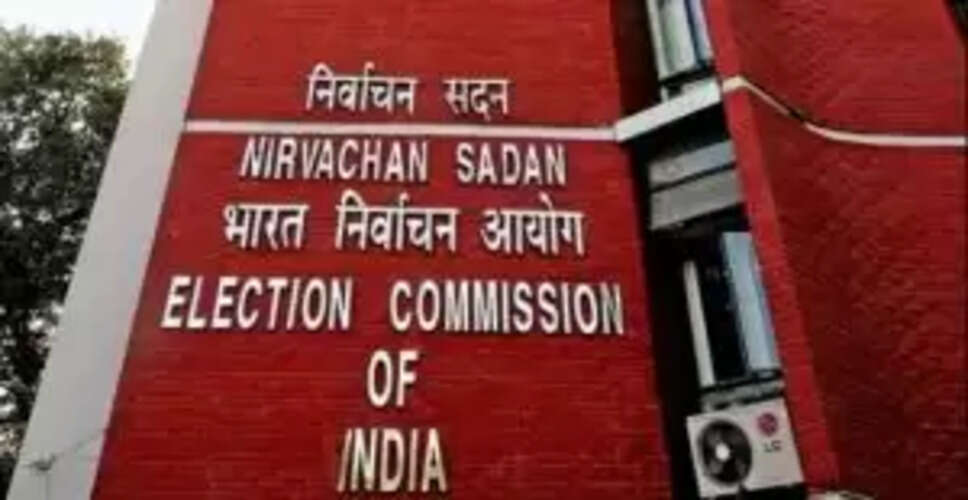
Political Tensions Rise Over Electoral Roll Revision in West Bengal
Kolkata: The Special Intensive Revision (SIR) of electoral rolls is set to commence in West Bengal on Tuesday, igniting a political firestorm. The BJP and the Election Commission are promoting this initiative as a move towards greater transparency, while the TMC is preparing for a grassroots confrontation ahead of the 2026 assembly elections.
This revision of the voters' list follows a similar process that took place in the state back in 2002.
The BJP has embraced the SIR as a significant step towards enhancing the transparency of electoral rolls. In contrast, the ruling TMC has raised concerns about the timing and motives behind the revision, accusing the Election Commission of succumbing to pressure from the BJP to manipulate the voter list ahead of the upcoming state elections.
Both parties view the SIR as a precursor to the 2026 Assembly elections, framing the contest as a clash between administrative and organizational forces.
The BJP, encouraged by the Election Commission's proactive approach and the potential for central deployment, is optimistic about what it terms a 'cleansing' of West Bengal's voter list.
On the other hand, the TMC has mobilized its extensive booth network, determined to ensure that no legitimate voter is removed from the rolls.
The verification process, which involves house-to-house checks by booth-level officers (BLOs) from November 4 to December 4, has already become a contentious issue.
Chief Minister Mamata Banerjee is scheduled to lead a rally in Kolkata on Tuesday to protest what her party describes as a 'politically motivated revision' aimed at disenfranchising minorities and marginalized communities.
Abhishek Banerjee, the TMC's national general secretary and Mamata's nephew, has called for close monitoring of BLOs and has instructed the appointment of booth-level agents (BLAs) across all 84,000 booths to oversee the process.
In a recent virtual meeting with TMC leaders, Abhishek emphasized the need for constant surveillance of BLOs and insisted that party agents accompany them during their fieldwork to prevent any arbitrary deletions.
He has also mandated the establishment of war rooms in every assembly constituency, equipped with data teams and communication links to coordinate the revision process.
Abhishek stated that the next six months would serve as a critical test for the party's organizational capabilities.
Despite the urgency of the situation, data from the Election Commission as of October 30 indicates that the TMC is lagging behind its competitors in appointing BLAs. The BJP has deployed 294 BLA-1s and 7,912 BLA-2s, while the CPI(M) has appointed 143 and 6,175, respectively.
In contrast, the TMC has managed to appoint only 36 BLA-1s and 2,349 BLA-2s, although party insiders assert that they will close the gap by Monday.
The BJP has accused the ruling party of inflating the voter rolls, claiming that over 40 lakh 'duplicate or fake' names were present in Bengal's rolls during the 2024 Lok Sabha elections, and anticipates that the SIR will remove at least a crore names.
'Those who have thrived on ghost voters and fraudulent ballots are now panicking,' stated BJP state president Samik Bhattacharya.
In response, TMC leaders have issued stern warnings. Barrackpore MP Partha Bhowmik recently declared that if even one 'genuine voter's name' is deleted, 'local BJP leaders will not be allowed to leave their homes.'
Abhishek Banerjee has threatened to mobilize 'one lakh people from Bengal' to the Election Commission office in Delhi if any voter names are unjustly removed.
The BJP counters that the TMC's so-called 'booth muscle' operates under the protection of a compliant police force.
Amid this charged atmosphere, the Election Commission has trained over 80,000 BLOs and provided a 16-point guideline along with a mobile app to facilitate operations.
Training for BLAs, the party representatives who will accompany the BLOs, is set to conclude on November 3.
However, the training process has faced challenges, with teachers assigned as BLOs protesting being marked 'absent' in school registers during their training sessions.
Many have requested central security for both training and fieldwork, citing threats and political intimidation.
'We are being sent to volatile areas without protection,' lamented a teacher from the North 24 Parganas district.
The TMC has alleged that four individuals have died by suicide, fearing the loss of their voting rights, while another is hospitalized after ingesting poison.
The BJP has dismissed these claims as 'manufactured melodrama.'
Observers interpret the escalating tensions as a continuation of West Bengal's political dynamics, where the struggle is not just for votes but for control.
In both the 2021 Assembly and 2024 Lok Sabha elections, the BJP relied heavily on central forces, while the TMC drew strength from its disciplined booth machinery.
The outcomes favored the TMC on both occasions.
'Bengal's politics has always been contested at the booth level. The SIR will not only test the integrity of the voter list but also the resilience of these two factions, one administrative and one organizational,' remarked a political scientist based in Kolkata.
The enumeration phase will be followed by the publication of draft rolls on December 9. Objections can be submitted until January 8, with the final voter list scheduled for release on February 7, just two months before the anticipated 2026 Assembly elections in April-May.
As the political landscape in Bengal shifts from large rallies to door-to-door campaigns, the focus has turned to the voter list itself. In this SIR exercise, the real contest lies in determining who gets included or excluded from the rolls, as every single name could significantly impact the final tally.