
Typhoon Kalmaegi Devastates Central Philippines: 66 Confirmed Dead and 26 Missing
Tragic Impact of Typhoon Kalmaegi
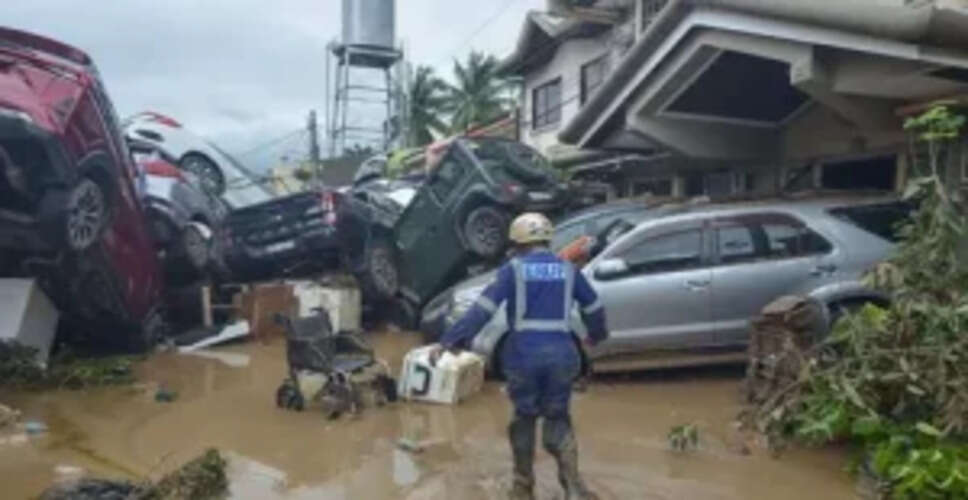
In Manila, Typhoon Kalmaegi has tragically resulted in at least 66 fatalities, with 26 individuals still unaccounted for in the central Philippines. The storm has caused extensive flooding, leaving many residents stranded on rooftops and sweeping away numerous vehicles in a province that is still recovering from a recent earthquake, officials reported on Wednesday.
Additionally, six fatalities occurred in a separate incident involving a Philippine air force helicopter that crashed in Agusan del Sur while on a mission to provide humanitarian aid to areas affected by Kalmaegi. The military has not disclosed further details regarding the cause of the crash.
Kalmaegi moved away from western Palawan into the South China Sea by noon on Wednesday, with sustained winds reaching 130 kph (81 mph) and gusts up to 180 kph (112 mph), according to meteorologists.
According to Bernardo Rafaelito Alejandro IV, deputy administrator of the Office of Civil Defence, the majority of the casualties were reported in Cebu province, which experienced severe impacts from the typhoon on Tuesday, leading to flash floods and swollen rivers.
The flooding inundated residential areas, forcing residents to seek refuge on their roofs, where they called for help as the waters rose, officials stated.
The Office of Civil Defence reported that at least 49 individuals drowned in the floods, while others perished due to landslides and falling debris in Cebu, where 13 of the 26 missing persons were last reported.
The Philippine Red Cross received numerous distress calls from individuals trapped on rooftops in Cebu, as its secretary-general Gwendolyn Pang noted that rescue efforts had to be delayed until the floodwaters receded to ensure the safety of emergency responders.
Cebu Governor Pamela Baricuatro expressed her frustration, stating, "We did everything we could for the typhoon, but unexpected events like flash floods can occur."
U.S. Ambassador to the Philippines, MaryKay Carlson, extended her condolences regarding the loss of life and destruction caused by the storm, affirming that the United States is prepared to assist in recovery efforts.
Governor Baricuatro also pointed out that the torrential rains may have been exacerbated by years of quarrying, which led to significant siltation of local rivers, causing them to overflow, alongside inadequate flood control measures in Cebu.
Recent corruption scandals surrounding substandard flood control projects across the Philippines have ignited public outrage and protests.
Baricuatro emphasized the need for an investigation into the flood control projects in Cebu, insisting that accountability is essential.
Cebu, home to over 2.4 million residents, has declared a state of calamity to expedite the allocation of emergency funds for disaster response.
The province was still in recovery mode from a 6.9 magnitude earthquake on September 30, which resulted in 79 deaths and left thousands displaced due to collapsed or severely damaged homes.
Many residents displaced by the earthquake had been moved to sturdier evacuation shelters before the typhoon struck, with northern towns that suffered from the earthquake largely spared from the flooding caused by Kalmaegi.
Other fatalities attributed to the typhoon included an elderly villager who drowned in Southern Leyte province after the storm made landfall in one of its eastern towns. Additional deaths occurred due to drowning and falling debris in various locations.
Prior to Kalmaegi's landfall, over 387,000 individuals had evacuated to safer areas in eastern and central provinces of the Philippines. Authorities had issued warnings about heavy rains, damaging winds, and storm surges reaching up to three meters (nearly 10 feet).
The coast guard reported that interisland ferries and fishing boats were prohibited from sailing due to rough seas, leaving over 3,500 passengers and cargo truck drivers stranded at nearly 100 seaports. At least 186 domestic flights were also canceled.
The Philippines faces an average of 20 typhoons and storms annually, alongside frequent earthquakes and the presence of over a dozen active volcanoes, making it one of the most disaster-prone nations worldwide.
Meanwhile, central Vietnam, still recovering from record rainfall that caused flash floods and landslides, is preparing for more heavy rain as Kalmaegi approaches. State media reported that emergency measures are being implemented to address both the storm and the anticipated flooding. Fishing boats along the coast are returning to shore, and local authorities are organizing evacuation plans, securing shelters, and stockpiling food.
Forecasters predict that the storm will reach Vietnam's coastline by Friday morning.
Thailand's weather agency has also issued warnings for the northern, eastern, and central regions, indicating that Kalmaegi will bring "heavy to very heavy" rainfall from Friday into the weekend, potentially leading to flash floods, landslides, and river overflows.