
Tensions Rise Between US and Israel Over Iran Military Actions
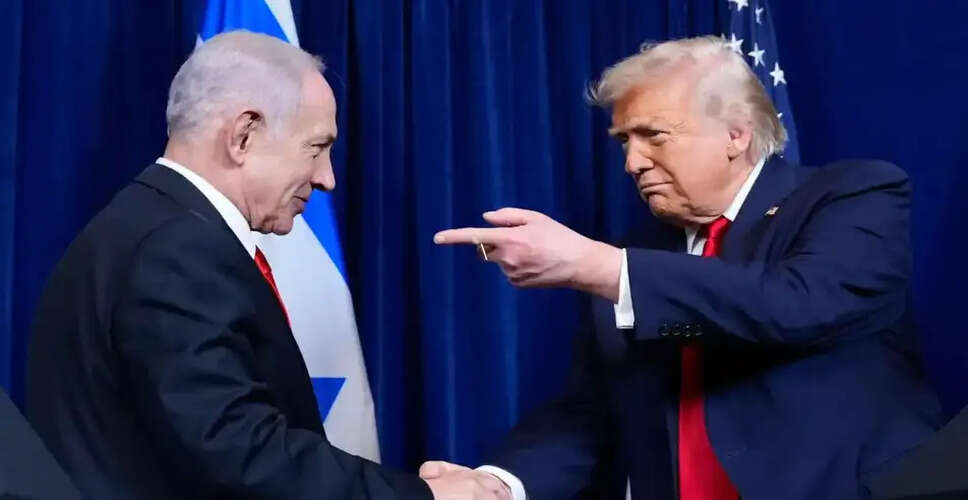

US-Israel Relations Under Scrutiny
Recent reports indicate a strained dialogue between US President Donald Trump and Israeli Prime Minister Benjamin Netanyahu regarding military actions against Iran. In response, Israel's ambassador to the US, Yechiel Leiter, attempted to mitigate concerns about a potential rift, emphasizing the longstanding alliance between the two leaders despite occasional disagreements. He noted that Trump had suggested Israel reduce its military operations against Iran as the US seeks a diplomatic resolution with Tehran. Leiter remarked, 'They have a deep friendship that spans nearly four decades, and like any close relationship, there can be moments of tension.' He further stated that while Netanyahu agreed to temper military responses at Trump's urging, the US president recognizes Israel's need to respond to threats, particularly from ballistic missiles.
'Bibi, Exercise Caution': Trump's Warning
In an interview with Axios, Trump revealed he had advised Netanyahu to be cautious following a series of strikes exchanged between Israel and Iran. He warned, 'Bibi, you better be careful, or you will be on your own very soon.' Trump also mentioned that Israel had provided the US with minimal advance notice before executing strikes on Iran recently. He noted that several regional nations had reached out to him expressing concern and urging him to engage with the Israeli government regarding the escalating situation. 'These countries were very worried. They appreciate the deal we have been negotiating,' he stated, without naming the nations involved.
In his first public comments since Iran initiated missile attacks on Israel, Netanyahu asserted that Tehran aimed to 'create a new equation' through its retaliatory actions. This latest round of conflict represents the most significant escalation since the ceasefire declared on April 8. Concurrently, Iran's Islamic Revolutionary Guard Corps has issued warnings that it may retaliate by targeting infrastructure in Israel and Gulf states.