
Supreme Court's Directive on Political Party Transparency: A Step Towards Democratic Accountability
The Role of Political Parties in Indian Democracy
In the framework of Indian democracy, political parties serve not only as a means to power but also as the backbone of public trust. Unfortunately, this backbone has yet to be solidified within a transparent structure. At a time when political accountability often reduces to mere election slogans, the Supreme Court's indication that it may direct political parties to publicly disclose their memoranda, rules, and regulations is a significant development for the health of democracy.
Supreme Court's Notice to Government and Election Commission
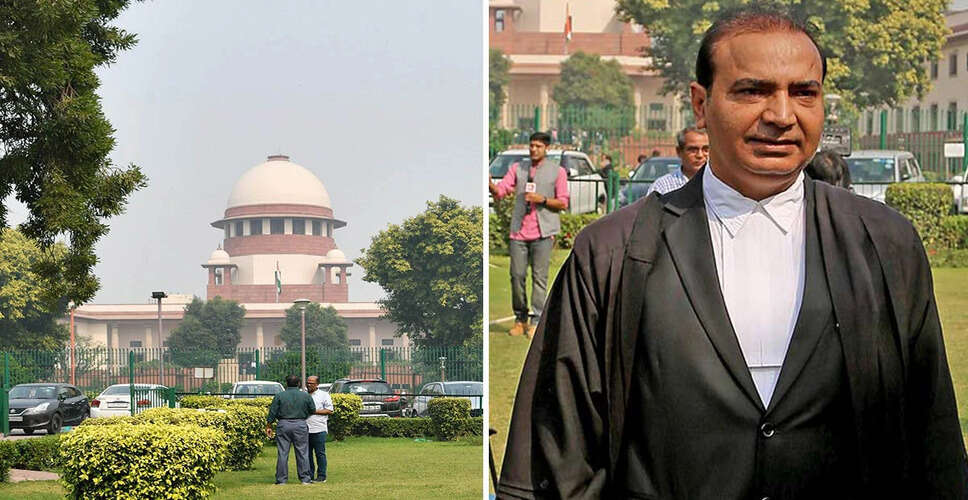
A bench comprising Justices Surya Kant, Ujjwal Bhuiyan, and Joymalya Bagchi issued a notice to the central government and the Election Commission while hearing a public interest litigation filed by senior advocate Ashwini Upadhyay. The court made it clear that it would like to issue some directives unless there are substantial obstacles. The Supreme Court remarked to the additional solicitor general KM Nataraj representing the government that there are meaningful prayers in the petition. This statement symbolizes the judiciary's vigilant role in strengthening the roots of democracy.
Ashwini Upadhyay's Ongoing Mission for Democratic Reform
Ashwini Upadhyay, widely recognized as the 'PIL Man' across the country, has consistently worked towards building a healthy democracy through public interest litigations. Whether it concerns electoral reforms, debates on a uniform civil code, or preventing criminals from entering politics, Upadhyay has raised demands for judicial intervention in nearly every area where governmental silence has been glaring.
Demand for Transparency in Political Parties
His latest petition extends this mission, urging political parties to present their constitutions, regulations, and financial transparency to the public. Citizens have the right to know how democratic and accountable the organizations are to which they entrust their fate. This demand is not merely a technical formality; it is intrinsically linked to the soul of democracy. Section 29A of the Representation of the People Act already states that political parties must adhere to their memoranda and rules, yet these provisions have never undergone public scrutiny. Consequently, numerous 'paper parties' continue to exploit the flaws in the electoral system, undermining public trust.
Potential Impact of the Court's Decision
Should the court issue concrete directives on this petition, it would not only mark a historic step towards electoral transparency but also provide a moral cleansing for India's democracy—one founded on the public's right to information and the accountability of political parties. Continuous efforts by individuals like Ashwini Upadhyay have demonstrated that the judiciary is not just a guardian of the law but also a protector of the soul of democracy.