
Supreme Court Upholds Election Commission's Authority Amid Controversy
In a significant ruling, the Supreme Court has confirmed the Election Commission's authority to manage the Special Intensive Review (SIR) process, amidst allegations of political motivations behind the removal of voters from electoral rolls. Activist Yogendra Yadav expressed concerns over the court's focus on grievance resolution rather than the constitutional implications of the SIR. He criticized the decision to allow elections in Bihar without addressing alleged flaws in the voter lists, suggesting that this could lead to mass disenfranchisement. The court's ruling has sparked discussions about the potential erosion of constitutional protections for voters.
| May 27, 2026, 14:41 IST
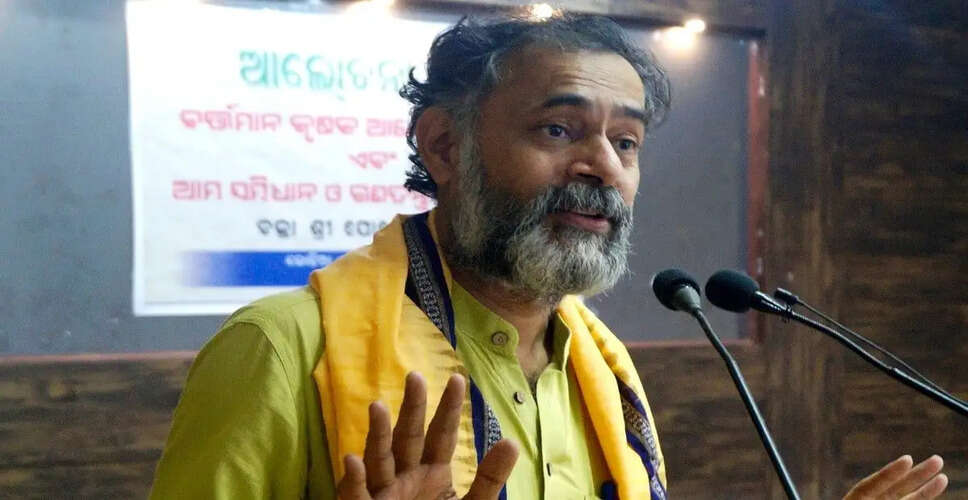

Supreme Court's Decision on Special Intensive Review
In a recent development regarding the Special Intensive Review (SIR) case, activist and election analyst Yogendra Yadav stated that he did not attend the court to hear the final verdict. He expressed his belief that the decision had been predetermined long ago, with only the written documentation and finer details pending. The Supreme Court affirmed the Election Commission's authority to conduct the SIR process, emphasizing that this would invigorate the democratic election process. This ruling follows allegations against the Election Commission, where critics claimed that a significant number of voters were removed from the electoral rolls for political reasons during the voter list purification process.
The bench, led by the Chief Justice, also ruled that the removal of names from the voter list does not equate to losing citizenship. This decision emerged amidst accusations from petitioners that the process was being used indirectly to affect citizenship status.
Concerns Raised by Yogendra Yadav
Yadav criticized the court for focusing on grievance redressal and mediation rather than examining the constitutionality of the SIR after three days of hearings. He argued that the court acted more like a consumer forum than a constitutional court. Furthermore, he claimed that by allowing the Election Commission (ECI) to conduct elections in Bihar without addressing the alleged flaws in the voter lists or making prior decisions on key issues, the matter was effectively settled.
Implications of the Court's Ruling
According to Yadav, as the ECI advanced the sequential stages of the SIR while the court continued its hearings, the process became an "eventually established fact." He pointed out the bench's statements indicating that voters removed from the lists could still participate in the next elections, which he deemed a neglect of constitutional responsibility. He asserted that the court had effectively authorized the mass disenfranchisement of voters, marking this moment as a potential erosion of constitutional safeguards.