
Supreme Court Raises Concerns Over Delhi's Air Quality Monitoring During Diwali
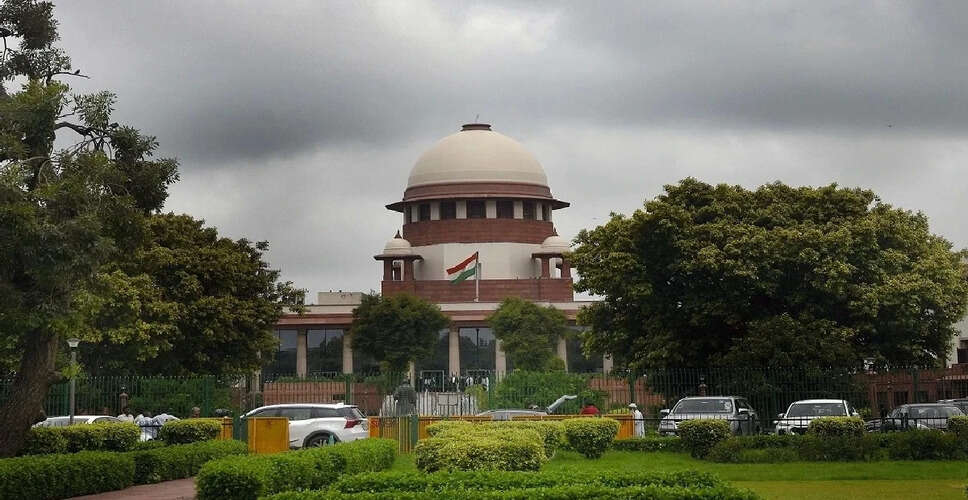
Supreme Court Highlights Air Quality Monitoring Issues
The Supreme Court has been informed that only nine out of 37 air quality monitoring stations in Delhi were operational during Diwali. This raises concerns about how the Graded Response Action Plan (GRAP) can be effectively implemented without reliable data. A lawyer representing the case pointed out that the air quality in the national capital remains 'very poor,' and the malfunctioning monitoring stations hinder the ability to track pollution levels or determine when restrictions should be enforced.
During the hearing, senior advocate Aparajita Singh, assisting the bench as an amicus curiae, urged the Supreme Court to direct the Air Quality Management Commission (CAQM) and the Central Pollution Control Board (CPCB) to take preventive measures to manage the escalating pollution levels.
She emphasized the need for timely action before the situation worsens, noting that many monitoring stations in Delhi are reportedly non-functional. The lawyer argued that without these stations operating, it would be impossible to know when to implement GRAP. She highlighted that only nine of the 37 monitoring centers were active during Diwali. In response, Chief Justice B.R. Gavai instructed the CAQM and CPCB to submit a report detailing the measures being taken to prevent further deterioration of air quality.
Monitoring Air Quality in Delhi
The Chief Justice and Justice K. Vinod Chandran's bench stated that the CPCB, along with state pollution control boards and regional offices under NCR, will monitor the air quality index in their respective jurisdictions from October 14 to 25. They are required to file a report specifying the air quality for each day.