
Supreme Court Overturns High Court Order on Illegal Construction in Gurugram
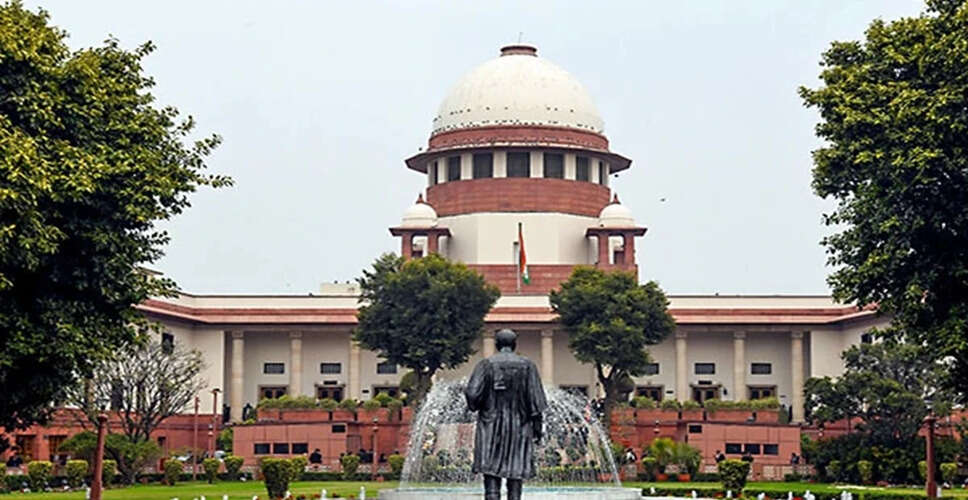
Supreme Court's Ruling on Gurugram Construction
The Supreme Court has annulled a directive from the Punjab and Haryana High Court that mandated the removal of unauthorized and illegal constructions in DLF City, Gurugram.
A bench comprising Justices J.K. Maheshwari and Vijay Bishnoi remarked that the order was issued without providing an opportunity for hearing to property owners who were not made parties to the lawsuits.
The bench noted that the instructions from the High Court, whether related to the jurisdiction of civil courts or the removal of constructions, appeared to have been issued without including the petitioners as parties in the writ petition.
It emphasized that ensuring fair justice necessitates giving an opportunity for a hearing, and the court should not make decisions affecting the rights of parties who have not been heard.
However, the bench clarified in its order dated October 28 that unauthorized or illegal constructions made contrary to the norms, rules, and regulations for commercial use on residential properties cannot be protected.
It stated, "We clarify that if any affected individual applies to the High Court within the specified time, they will also be allowed to participate in the hearing."
The bench added that state authorities are free to widely publicize this order to include affected individuals in the public interest litigation.
It mentioned that if the affected individuals do not apply to join the hearing within two weeks, the High Court is free to consider and decide on the matter.
The High Court had previously instructed the authorities to take action within two months under Section 15 of the Haryana Urban Development and Regulation Act, 1975.
The state government had presented a detailed summary of the case before the High Court, indicating multiple violations in the constructions of various residents in the Gurugram area.