
Supreme Court Halts Arrest of Former IPS Officer Kuldip Sharma in Long-Standing Case
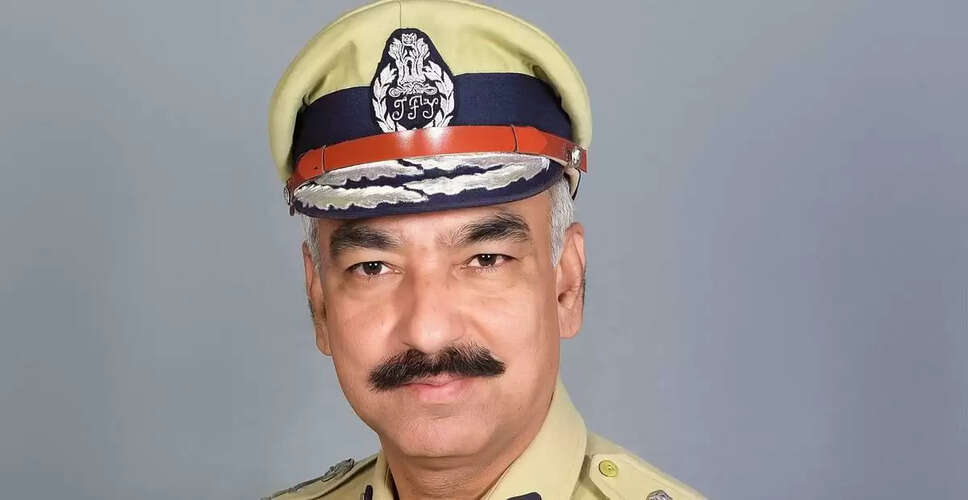
Supreme Court's Decision
On Monday, the Supreme Court intervened to stay the arrest of Kuldip Sharma, a former Indian Police Service officer, in connection with a wrongful confinement case that dates back 41 years. The court also exempted him from having to surrender to the trial court.
This ruling was issued by a bench comprising Justices Rajesh Bindal and Manmohan while they reviewed Sharma's appeal against a prior decision made by the Gujarat High Court.
Sharma's attorney, IH Syed, confirmed that the Supreme Court has overturned the High Court's ruling, providing relief to the former officer.
Background of the Case
The origins of this case trace back to 1984, when Sharma served as the deputy superintendent of police in Kutch. He faced allegations of assaulting and unlawfully detaining a suspected smuggler named Haji Abdul, also referred to as Ibhalaseth Haji Ibrahim Mandhra, within a police station.
Interestingly, the complaint was not lodged by Abdul, who has since passed away, but by a political activist named Shankarlal Govindji Joshi.
Joshi claimed that he and Abdul had approached Sharma on May 6, 1984, regarding alleged police misconduct in another case, during which Sharma allegedly assaulted and detained Abdul for approximately one hour.
The complaint was formally filed two days later, on May 8, 1984.
In 2012, the Gujarat government authorized the prosecution of Sharma, reviving the long-dormant case.
After a lengthy period, a trial court in Bhuj-Kutch convicted Sharma and his co-defendant GH Vasavada in February, sentencing them to three months in prison and imposing a fine of Rs 1,000 each, with an additional 15 days of imprisonment for non-payment.
In September, a sessions court upheld the conviction.
Sharma and Vasavada appealed the ruling in the High Court, seeking exemption from surrender, but their request was denied.
Consequently, Sharma filed a revision petition with the Supreme Court.
Sharma's Arguments
Sharma’s Contention
Sharma has maintained that the charges against him are baseless and politically motivated.
During the trial, he argued that prior to the Gujarat government's decision to prosecute him in 2012, a public prosecutor had been appointed to defend both him and Vasavada, indicating a contradiction in the government's stance.
Sharma asserted that this contradiction demonstrated that the government initially viewed them as innocent before later approving their prosecution.
When Sharma and Vasavada contested their conviction in the sessions court and subsequently approached the High Court, the state government opposed their appeal.
In a special leave petition submitted to the Supreme Court in 2015, Sharma alleged that he was being targeted due to the “malafide” intentions of Narendra Modi, who was the chief minister of Gujarat in 2012, and BJP leader Amit Shah.
Sharma pointed out that in 2010, Shah, who was the home minister at the time, was arrested in connection with the Sohrabuddin Sheikh encounter case, where he was accused of orchestrating the killings of Sohrabuddin, his wife Kausarbi, and associate Tulsiram Prajapati. Shah was later acquitted.
It was the Gujarat Police that initially raised concerns about the involvement of senior officers in these killings, based on an internal report filed in the Supreme Court at Sharma's direction, as he was the additional director general of police at that time.
Shah was granted bail shortly after his arrest, and two years later, the long-standing case against Sharma resurfaced.