
Strengthening Oversight on Madrasas: A National Security Initiative
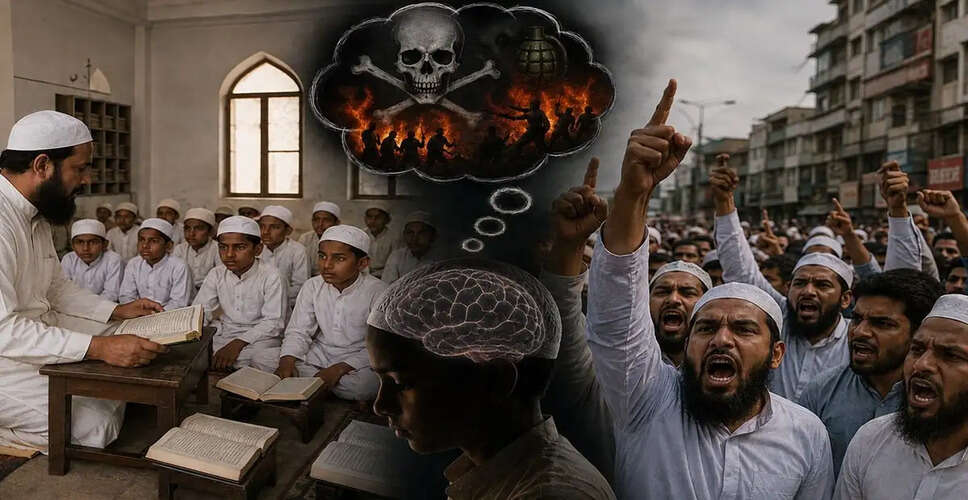

Increased Scrutiny of Madrasas Across India
From West Bengal to Uttarakhand, Bihar, and Uttar Pradesh, the government has initiated stringent monitoring and actions regarding madrasas, marking a significant campaign for national security, social balance, and educational reform. For years, questioning these institutions was seen as politically risky due to vote bank politics, but now, the legitimacy, financial transparency, security measures, and educational standards of madrasas are under examination. This shift indicates that governments are no longer turning a blind eye.
In West Bengal, the new administration has launched a comprehensive survey of madrasas throughout the state. District officials have been instructed to gather detailed information about each madrasa's establishment, registration, legal status, number of teachers, hostel facilities, and curriculum. This initiative is crucial as the number of madrasas has surged without effective oversight of their operations and activities. The government aims to ascertain how many institutions comply with regulations and how many have become hubs of religious extremism or suspicious activities. Furthermore, the state government has mandated the singing of 'Vande Mataram' in madrasas, sending a clear message that no institution can supersede the nation.
Uttarakhand's Historic Review of Madrasa Education
Uttarakhand has taken an even bolder step by implementing a Uniform Civil Code and conducting an in-depth review of madrasa education. The study revealed that a significant number of madrasas were operating without proper accreditation. Even where accreditation existed, the quality of education was alarmingly poor, with many institutions lacking qualified teachers. Most concerning was the finding that children kept away from modern education were becoming carriers of extremist ideologies rather than progressive thinkers. Consequently, the state government has repealed outdated madrasa laws and introduced a new minority educational institution law. Now, any institution seeking accreditation must adhere to standards of modern education, transparent financial practices, qualified educators, and social harmony.
National Security Implications of Educational Reforms
This decision is not merely an educational reform but a step linked to national security. Insights from officials who have worked in Jammu and Kashmir and border areas suggest that without reforms, the madrasa system could pose a threat to social cohesion. The fundamental question is whether the country needs future scientists, doctors, and administrative officers or extremist elements that foster division and hatred within society. When the focus of education shifts from modern knowledge to narrow religious ideologies, it becomes a means of national disintegration rather than construction.
Bihar's Statewide Audit of Madrasas
Similarly, the Bihar government has taken stringent measures by initiating a state-wide audit of all government-aided madrasas and Sanskrit schools. The government has made it clear that institutions operating fraudulently or misusing public funds will be shut down. While the opposition claims this is politically motivated, the reality is that any institution receiving government support must be held accountable. The education minister has stated that the goal is to ensure quality education, a completely valid argument, as no institution can be above the law in the name of education.
Concerns Over Illegal Madrasas
In Ghaziabad, Uttar Pradesh, the sealing of an illegal madrasa has further highlighted the seriousness of the situation. Investigations revealed that the madrasa was operating without registration and lacked fire safety and electrical safety certificates. Basic amenities for children in the hostel were also absent, clearly endangering their lives. It is not difficult to imagine the kind of education and mindset being imparted in such institutions. The administration has taken strict action, making it clear that illegal structures and unrecognized institutions will no longer be tolerated.
Addressing Extremism and Illegal Activities
The most alarming fact is that many instances of extremism, illegal activities, and social tensions have been reported around madrasas. When there is no oversight on an institution's financial practices, curriculum, teachers, and activities, it can become a safe haven for anti-national elements. This is why mere surveys or formal inspections are no longer sufficient. It is essential to bring every madrasa within the framework of modern education, the Constitution, national unity, and scientific thinking. Institutions unwilling to comply should be closed for the country's benefit.
A Shift Towards National Interest
The current actions of state governments are commendable as they prioritize national interests over long-standing political appeasement. Taking strict measures against institutions that promote extremism, illegal activities, and separatist ideologies in the name of education will be a decisive step towards a stronger India. The law, Constitution, and national security must prevail over any religious or political pressure, and governments are now conveying this message across the nation.
Expert Opinions on Madrasa Education
In this context, senior advocate and renowned PIL activist Ashwini Upadhyay has remarked that whether in India or Pakistan, madrasa education is similar, and if madrasas are not shut down, the country will face dire consequences.