
Kickboxing Super League Aims to Revolutionize Combat Sports in India
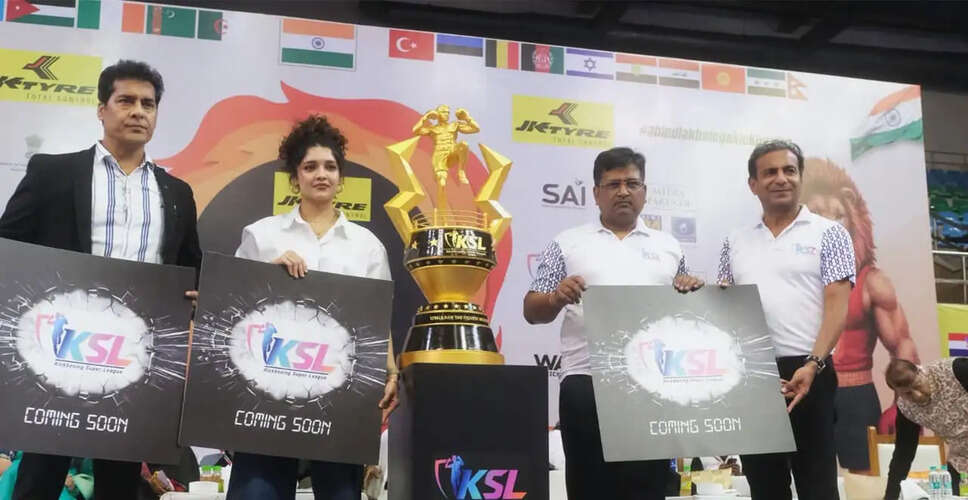

Introduction to the Kickboxing Super League
The Kickboxing Super League (KSL) was officially launched during the WAKO India National Championship held in Delhi. Co-founder Ajay Adlakha outlined the league's ambitious vision to establish a professionally organized sports and entertainment framework for kickboxing in India. As the nation's inaugural professional kickboxing league, KSL seeks to integrate grassroots development, franchise competitions, cultural elements, entertainment, and technological advancements to create a sustainable combat sports platform.
The Right Moment for Launch
Ajay Adlakha emphasized that the timing for KSL's launch is ideal, as India's sports sector is entering a transformative multi-sport phase. He noted, "The success of leagues such as the Indian Premier League and Pro Kabaddi League demonstrates that well-structured leagues can foster significant economic, cultural, and employment opportunities. The sports industry in India is expected to surpass ₹14,000 crore by 2026, with substantial investments from brands and digital platforms in sports engagement." He added that while kickboxing has a solid foundation, it lacked a professional framework.
Addressing the Need for Professional Structure
Adlakha pointed out that India has a robust grassroots kickboxing ecosystem, supported by various institutions. "Currently, there are over 200,000 registered kickboxers in India, along with 34 state federations and participation from more than 500 universities and 25,000 schools. Despite consistently winning international medals, the sport has been missing a commercially viable national platform," he explained.
Acknowledging Contributions
He also recognized the efforts of his business partner, Santosh Kumar Agrawal, who is the President of WAKO India and has played a pivotal role in promoting the sport at both grassroots and international levels. Adlakha stated, "KSL is the logical progression in transforming an existing combat sports movement into a structured sports and entertainment ecosystem."
The Clan Ecosystem and Franchise Model
Adlakha elaborated on KSL's unique 'Clan Ecosystem', which aims to revive India's traditional warrior ethos through modern sports, entertainment, and technology to foster grassroots talent. The league comprises eight franchise teams: Rajput Rulers, Maratha Masters, Ahom Avengers, Dogra Defenders, Chola Champions, Kalinga Kings, Gurkha Guardians, and Maurya Mavericks, each reflecting regional identity and cultural pride. He noted that these teams are designed to enhance fan engagement and regional loyalty.
Talent Identification and Scouting
The league will implement a comprehensive talent identification strategy, including open registrations, district trials, academy scouting, and university competitions, in collaboration with state federations. Adlakha mentioned that fighters from Tier 2 and Tier 3 cities will gain visibility through digital scouting and performance analytics.
Player Auctions and Career Opportunities
KSL will feature a blend of domestic and international talent, introducing a professional auction system. Adlakha stated, "The league will consist of 80% domestic and 20% international athletes, with team auction budgets ranging from ₹2-3 crore. Fighters and coaches will participate in a professional auction environment, benefiting from contracts, media exposure, and long-term career opportunities."
Beyond a Tournament: A Sports Entertainment Venture
Adlakha stressed that KSL is being developed as a comprehensive sports entertainment property rather than merely a competition. He stated, "KSL is not just a tournament; it is a dynamic sports entertainment venture, hosted in large arenas in Delhi with capacities exceeding 20,000, combining excitement, storytelling, technology, music, fan interaction, and live performances."
Commitment to Inclusivity and Women's Participation
On the topic of inclusivity, Adlakha affirmed that equality is a core principle of KSL's vision. He remarked, "Inclusivity is essential to KSL's mission. The combat sports sector in India has a strong and growing base of female athletes through grassroots initiatives, ASMITA leagues, and state competitions. KSL is dedicated to ensuring that women are recognized as central athletes within the ecosystem, not just as an afterthought."