
India's Strategic Relations in the Middle East: Insights from External Affairs Minister S. Jaishankar

Strengthening Ties with Middle Eastern Nations
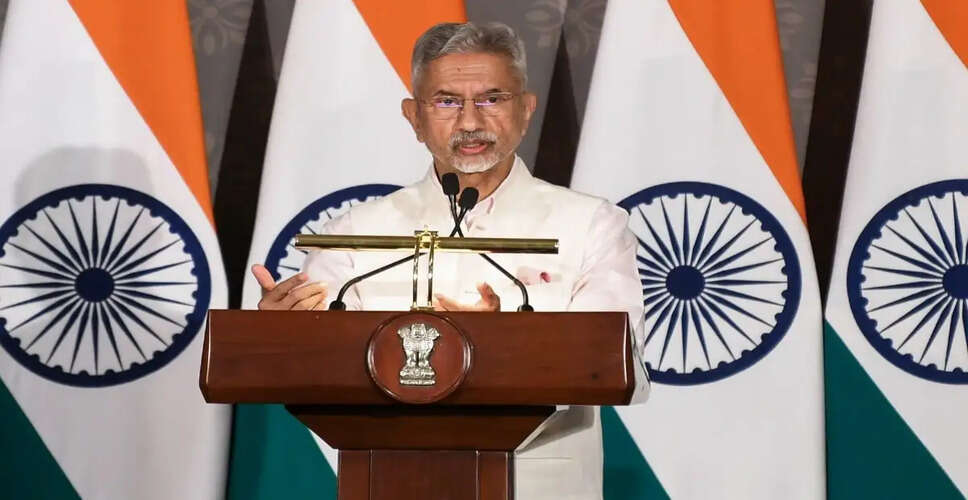
During a joint press conference in Delhi with U.S. Secretary of State Marco Rubio, External Affairs Minister Dr. S. Jaishankar elaborated on India's relationships with Middle Eastern countries. He emphasized, "India is among the few nations that maintain strong and positive relations with the U.S., Israel, Iran, and Gulf countries simultaneously. Therefore, our direct interests are intertwined with that region." He pointed out the challenge India faces in balancing these relationships while safeguarding its interests, stating that India does not view this as a zero-sum game.
Four Principles Guiding India's Approach
In his remarks, the minister outlined the key principles that shape India's perspective in the region. He stated, 'India always seeks peace and stability in this area. The welfare and security of the millions of Indian citizens residing in Gulf countries are of utmost importance to us.'
Energy Security and Trade
He further noted, 'India imports a significant amount of oil and gas from this region, so we aim to keep energy prices low and manageable. We want maritime trade from this area to be completely secure and uninterrupted. Additionally, we desire open markets without trade restrictions.'
Understanding India's 'Multi-Alignment' Policy
Dr. Jaishankar referenced the Ukraine crisis to illustrate India's role in global conflicts, stating that wherever there are challenging situations, India will play a crucial role. This is due to India's expanding interests and strong ties with all parties involved in disputes. He highlighted that India's relationships with Russia, Europe, Ukraine, and the U.S. are robust, defining this approach as 'multi-alignment' due to the necessity of managing multiple relationships simultaneously.
Visa Issues for Legitimate Travelers
Highlighting the strength of people-to-people connections between the two nations, Dr. Jaishankar raised concerns regarding visa challenges in front of the U.S. Secretary of State. He mentioned, "I informed Secretary Rubio about the difficulties legitimate travelers face in obtaining visas. While we fully support the U.S. in preventing illegal and unauthorized movements, we hope that this does not hinder those traveling legitimately, as it is vital for our trade, technology, and research."
Zero-Tolerance Stance on Terrorism
At the conclusion of the press conference, the External Affairs Minister reiterated India's firm stance against terrorism. He stated that India's approach is one of 'zero tolerance,' meaning that terrorism will not be tolerated under any circumstances. He praised the ongoing strong cooperation between Indian and U.S. security agencies in this regard, specifically mentioning the extradition of a key conspirator from the 26/11 Mumbai attacks by the U.S. to India, and affirmed that both countries will enhance their collaboration against illegal trade and terrorism on bilateral and international platforms.