
India's Nuclear Ambitions: A Leap Towards Energy Independence with New Reactor
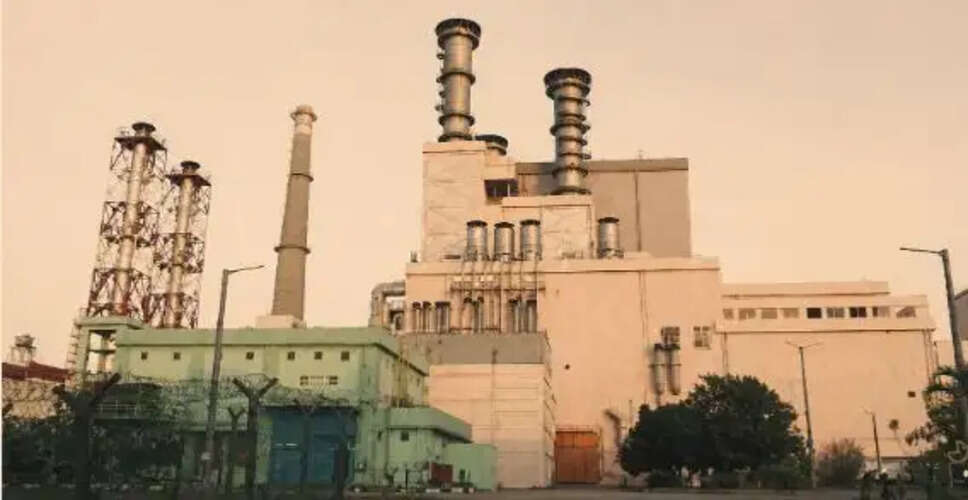

Significant Milestone in Nuclear Energy
New Delhi: India has made a pivotal advancement towards achieving energy self-sufficiency with the successful criticality of its 500 MW Prototype Fast Breeder Reactor (PFBR) located in Kalpakkam, Tamil Nadu. This crucial phase indicates that the reactor has reached a state where it can maintain a controlled and self-sustaining nuclear chain reaction for the first time.
As reported by Business Report, this achievement positions India among a select group of nations that possess sophisticated fast breeder reactor technology, with Russia being the sole other country currently operating commercial fast breeder reactors.
This milestone is seen as a significant breakthrough in India's three-stage nuclear power initiative, originally conceptualized by the renowned nuclear scientist Homi Jehangir Bhabha, who is often credited as the architect of India's nuclear strategy.
The PFBR is engineered to produce more fuel than it consumes by utilizing plutonium-based fuel and generating additional fissile material, thereby enhancing India's long-term energy security.
Furthermore, the reactor's criticality marks India's progression into the second phase of its nuclear program.
In the initial stage, natural uranium serves as fuel in nuclear reactors, yielding plutonium as a by-product.
The second phase focuses on employing this plutonium in Fast Breeder Reactors (FBRs), as outlined in the report.
The Kalpakkam reactor is anticipated to be instrumental in the development of Uranium-233 from thorium, setting the stage for the third phase of the program, where India aims to harness its extensive thorium reserves for large-scale energy production.
Additionally, India is home to some of the largest thorium reserves globally, while its uranium resources are comparatively limited.
The report emphasizes that energy generation based on thorium could potentially satisfy the country's power demands for several centuries.
This development is also expected to bolster India's transition to clean energy and its commitment to achieving net-zero carbon emissions by 2070, under the guidance of Prime Minister Narendra Modi.
Currently, India's nuclear power generation capacity is at 8.78 GW, contributing nearly 3% to the nation's electricity output.
With the introduction of indigenous 700 MW reactors and forthcoming international collaborations involving 1,000 MW reactors, India's total nuclear capacity is projected to reach 22.38 GW by the fiscal year 2031-32.