
India's Ambitious Plan to Become a Major Shipbuilding Hub
Transforming India's Shipbuilding Industry
Guwahati, Nov 5: Despite maritime routes handling 90% of India's foreign trade by volume, the nation relies heavily on foreign vessels, incurring an annual expenditure of approximately Rs 6 lakh crore. To address this challenge, the Indian government has devised an ambitious strategy aimed at establishing the country as a significant shipbuilding center.
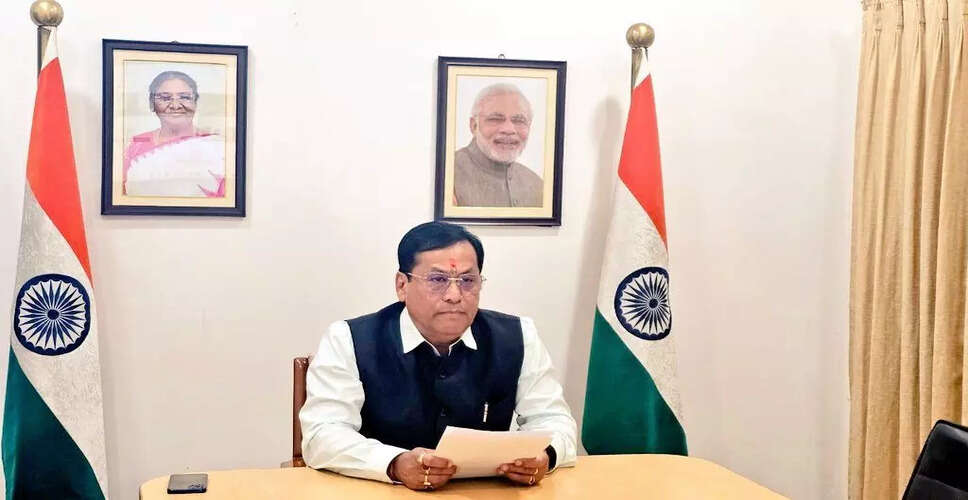
The Minister for Ports, Shipping, and Waterways, Sarbananda Sonowal, announced that the Government of India has launched a shipbuilding financial assistance initiative worth Rs 24,736 crore, with the goal of achieving self-sufficiency in vessel production within the next 25 years.
Currently, only about 5% of India's export-import cargo is transported by Indian-owned or flagged vessels, leaving the country reliant on foreign ships for the remaining 95%. This dependency not only results in substantial foreign exchange losses but also poses risks to national security.
Sonowal emphasized that achieving self-reliance in shipping would significantly boost employment and investment, with projections suggesting that over two million jobs could be created in the shipping sector alone.
The Minister outlined a comprehensive approach to foster self-sufficiency, which includes the Shipbuilding Financial Assistance Scheme, a Maritime Development Fund of Rs 25,000 crore, and a Capacity and Capability Development Fund exceeding Rs 19,000 crore. The aim is to position India among the top ten shipbuilding nations by 2030 and within the top five by 2047.
Historically, India was a formidable player in shipbuilding, but its prominence has waned due to neglect by previous administrations.
In contrast, South Korea has provided a 30% direct subsidy on each vessel since 1968, while China has offered similar support since 2006. Both countries have also implemented tax exemptions and low-interest financial assistance for shipbuilders, resulting in them capturing 76% of the global shipbuilding market, while India accounts for a mere 0.07% of global shipbuilding tonnage.