
India Joins Pax Silica to Enhance Economic Security and AI Collaboration
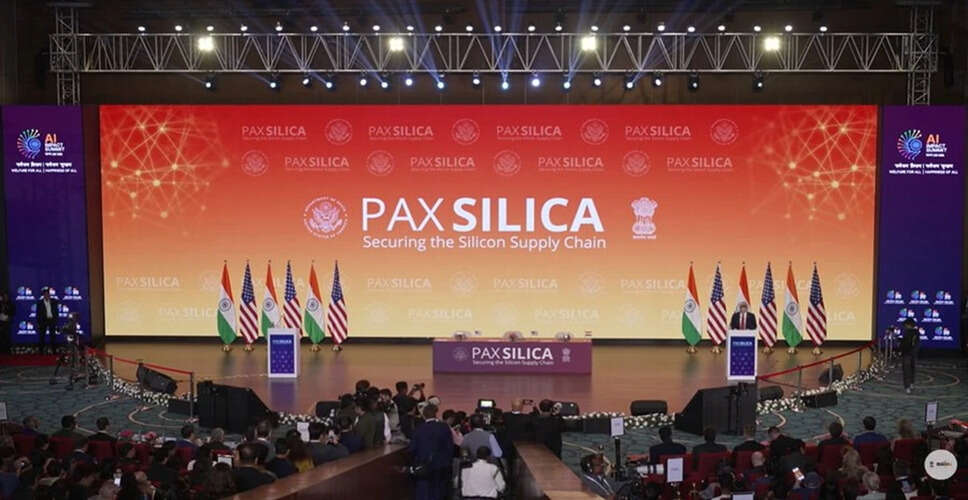

India's Formal Entry into Pax Silica
On Friday, India officially became a member of Pax Silica, a move aimed at fostering new economic security agreements among allies and trusted partners. Pax Silica represents a significant initiative by the U.S. Department of State focusing on AI and supply chain security. This announcement was made during the ongoing India AI Impact Summit in New Delhi, symbolizing India's formal entry into a framework designed to create a secure, resilient, and innovation-driven supply chain for critical minerals and AI.
The initiative aims to enhance technological collaboration and ensure secure access to essential resources needed for next-generation industries.
Strengthening Bilateral Relations
This development comes as part of efforts to finalize a trade agreement proposed by New Delhi and Washington, aimed at deepening bilateral ties following a period of strained relations. The Pax Silica declaration emphasizes the importance of a reliable supply chain for mutual economic security and recognizes AI as a transformative force for long-term prosperity.
Ashwini Vaishnaw, the Union Minister for Electronics and Information Technology, stated that India's inclusion in Pax Silica will greatly benefit the country's electronics and semiconductor sectors. With ten plants already established and several more in the pipeline, the first semiconductor plant is set to commence commercial production soon, contributing to the emergence of a comprehensive ecosystem in India.
Strategic Alliance for the 21st Century
U.S. Ambassador Sergio Gore described this initiative as a strategic alliance shaping the economic and technological landscape between India and the United States in the 21st century. He highlighted India's engineering talent, advancements in mineral processing, and its role in strengthening U.S.-India technology cooperation. The partnership aims to promote reliable AI on a global scale, emphasizing that 'peace comes from power.'
Dependence on Critical Minerals
Artificial intelligence (AI) and semiconductor manufacturing heavily rely on minerals such as lithium, cobalt, rare earth elements, and gallium, with China currently dominating many of these supply chains. Through Pax Silica, India gains access to a coordinated sourcing framework and reliable mineral partnerships, aligning with its efforts to secure lithium blocks abroad (like in Argentina) and expand domestic processing of rare earth elements. This is crucial for long-term sustainability in electric vehicles (EVs), AI hardware, and defense electronics, potentially reducing India's heavy dependence on China for rare earth mineral imports.