
India Exposes Pakistan's Misinformation at UNSC Meeting on Afghanistan

Diplomatic Tensions Between India and Pakistan Resurface
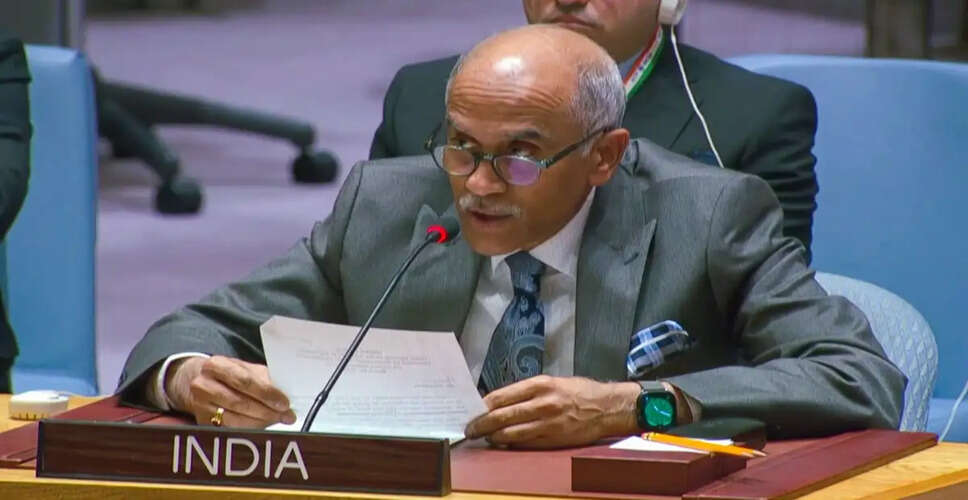
During a recent meeting of the United Nations Security Council (UNSC) focused on the situation in Afghanistan, diplomatic tensions between India and Pakistan were prominently highlighted. India firmly countered Pakistan's propaganda, bringing its claims to light on a global platform. India's Permanent Representative to the UN, Ambassador Harish Parvathaneni, dismissed Pakistan's assertions, labeling them as a "campaign of officially sponsored misinformation wrapped in religious rhetoric."
The Reality Behind 'Fitna Al-Hindustan'
According to reports from Pakistani media, the government of Pakistan has officially designated terrorist groups operating in the Balochistan province as 'Fitna Al-Hindustan.' Without providing any evidence, Pakistan alleged that these organizations were acting on India's instructions. In response, Indian Ambassador Harish Parvathaneni stated, "Pakistan has issued official notifications directing its agencies to refer to active groups within its borders as 'Fitna Al-Hindustan.' This is a result of an organized factory of hatred driven by Pakistan's power establishment, aimed at maintaining a state of permanent hostility against India among its citizens."
Distraction from Domestic Issues
He further explained that the true intent behind this propaganda is to divert the attention of the Pakistani populace from pressing political and economic issues, allowing the ruling establishment to retain control over national resources. Parvathaneni pointed out that the recent constitutional amendment, which facilitated a military coup, exemplifies this tactic. He referred to the amendment passed by the Pakistani parliament last year, which created the position of Chief of Defense Forces (CDF), subsequently appointing Field Marshal Asim Munir as the first CDF of Pakistan.
Condemnation of Military Actions
During the UNSC meeting, the Indian envoy also condemned Pakistan's military airstrikes against Afghanistan. Parvathaneni reiterated, "I emphasize again, disguising genocide as a military operation does not absolve the perpetrator of responsibility. Killing civilians, maiming them, and orphaning children is not counter-terrorism. To conduct brutal airstrikes during the holy month of Ramadan while claiming adherence to international law and the high principles of Islamic solidarity is the epitome of hypocrisy." He concluded by stating that blaming neighbors for its failures is an old habit of Pakistan, and such attempts to mislead the world will ultimately fail.