
How AI and Medical Professionals Were Involved in the Red Fort Blast Investigation
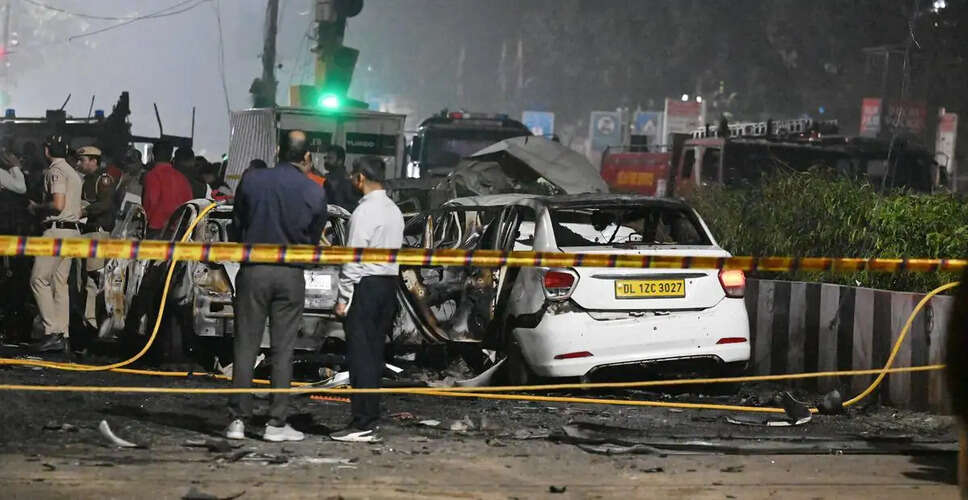

NIA Uncovers Alarming Details in Red Fort Blast Case
The National Investigation Agency (NIA) has revealed shocking insights into the car explosion that occurred near the Red Fort in Delhi. Investigators discovered that a suspect, associated with a faction of the global terrorist group Al-Qaida, allegedly exploited an artificial intelligence platform for what they termed "terror engineering."
Sources indicate that the accused were involved in creating rocket Improvised Explosive Devices (IEDs) and testing them in the Qazigund forest located in Anantnag district, Jammu and Kashmir.
These findings are part of a comprehensive 7,500-page chargesheet submitted by the NIA on May 14, detailing the high-intensity vehicle-borne IED blast that shook the capital on November 10 of the previous year.
The chargesheet, presented to a special NIA court, outlines a meticulous approach taken by the accused in the design and deployment of IEDs, described by officials as "almost laboratory-grade."
One of the individuals charged, identified as Jasir Bilal Wani, served as the "in-house engineer" for the Ansar Ghazwat-ul-Hind (AGuH) terror module, which is linked to Al-Qaida in the Indian Subcontinent (AQIS).
The Ministry of Home Affairs has designated AQIS and its affiliates as terrorist organizations.
According to the chargesheet, Wani had visited the Al Falah University campus in Faridabad, Haryana, multiple times in 2024-25 to provide technical assistance for the conspiracy. The university's involvement came under scrutiny after it was revealed that three doctors employed there were allegedly connected to the blast.
Wani was introduced to Dr. Umer un Nabi, another key suspect and the driver of the explosive-laden vehicle, by Dr. Adeel Ahmed Rather. The explosion resulted in the deaths of 11 individuals and left many others injured.
The NIA's investigation indicates that Adeel played a crucial role in supplying materials for the IEDs, including powdered sugar and potassium nitrate, while Dr. Umer conducted research on improvised rocket IEDs and offered guidance.
The chargesheet highlights that Wani utilized platforms like YouTube and ChatGPT to search for instructions on creating rockets and the appropriate mixture ratios, showcasing the alleged misuse of digital and AI resources for terrorist purposes.
Wani reportedly prepared and tested rocket IEDs in the Qazigund forest alongside Dr. Umer, Dr. Muzammil Shakeel, and other co-conspirators. NIA teams recovered remnants of these devices during extensive investigations based on Wani's disclosures.
The chargesheet also reveals that Dr. Umer recognized Wani's potential and provided him with two drones, instructing him on how to enhance their flying range and payload capacity. The plan was to weaponize these drones for attacks on security installations in Kashmir and beyond.
In another incident, the group tested a cylinder-based IED in the Youshmurg forest near Mattan, involving Dr. Umer, Wani, Dr. Muzammil, and Dr. Adeel. The remnants from these tests were later seized by NIA teams.
During a controlled simulation, Wani demonstrated his capability to fabricate functional rocket IEDs using commercially available materials to a bomb detection and disposal squad expert team.
The investigation uncovered chilling forensic evidence regarding the trigger mechanism of the vehicle-borne IED used by Dr. Umer. Between December 2023 and January 2024, Wani allegedly ordered various components for the trigger mechanism through his Flipkart account, including a sensor-inductive proximity switch and a remote control relay-switch RF kit.
Dr. Umer funded these purchases, with Wani receiving the items via cash-on-delivery. These components were later assembled and handed over to Dr. Umer for IED construction.
Ultimately, Dr. Umer utilized the trigger mechanism to detonate the VB-IED, resulting in the explosion near the Red Fort.
The NIA's findings indicate that the accused had fabricated and tested various IED types, with the explosive used in the blast being Triacetone Triperoxide (TATP), which was clandestinely manufactured after procuring the necessary ingredients.
Previously, the Srinagar police had dismantled a "doctor" or "white-collar" module linked to the blast, revealing a broader "jihadi conspiracy" through detailed scientific and forensic investigations. Some of the accused, including radicalized medical professionals, were inspired by AQIS/AGuH ideology to execute the deadly attack.