
Historic Milestone Achieved in Zojila Tunnel Project
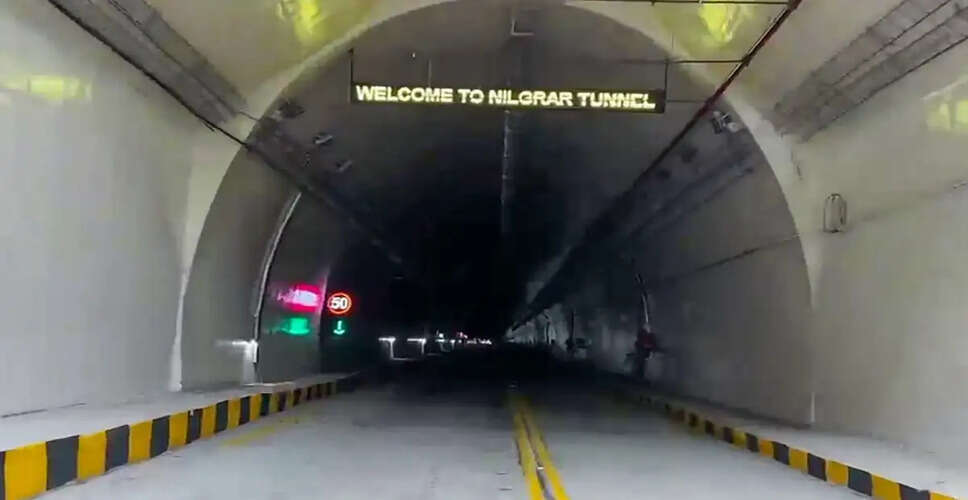

Significant Progress in Zojila Tunnel Construction
The Zojila Tunnel project has reached a remarkable milestone today. This tunnel, being constructed at a high altitude, is recognized as one of the longest single-tube bi-directional road tunnels in the world. A crucial blast was executed today to break the final rocky barrier, marking one of the project's key achievements. The event was attended by the Union Minister for Road Transport and Highways, Nitin Gadkari, along with Jammu and Kashmir's Lieutenant Governor Manoj Sinha and Chief Minister Omar Abdullah.
Final Stages of Construction
According to officials, only about three meters of rock remain between the two ends of the tunnel. Following this last blast, direct connectivity will be established between the Baltal area of Sonmarg in Kashmir and the Meenamarg region of Ladakh. This project is considered vital for connecting Jammu and Kashmir with Ladakh throughout the year.
Challenging Terrain and Project Significance
The Zojila Tunnel is being constructed between Baltal, Sonmarg, and Meenamarg, Dras, and Kargil, in one of the most challenging terrains of the Himalayas. Heavy snowfall, avalanches, and adverse weather conditions often halt traffic for several months each year. Once completed, the tunnel will ensure uninterrupted connectivity between Kashmir and Ladakh year-round.
Project Cost and Timeline
The project, situated at an elevation of approximately 11,578 feet, is estimated to cost around ₹6,500 crores. It is among the most ambitious and challenging engineering projects in India's mountainous infrastructure history, with a target completion date set for 2028. This tunnel is part of the Srinagar-Kargil-Leh National Highway, and its completion will enhance the speed and safety of movement for both civilians and military personnel.
Enhanced Airflow and Future Prospects
Experts suggest that once the two ends of the tunnel are connected, airflow within will improve, facilitating faster progress on the remaining construction. Officials anticipate that the entire project could be completed within the next two years, although the tunnel may be utilized temporarily for military needs in emergencies.
Advanced Technology and Safety Features
The project incorporates state-of-the-art safety and technical features. A semi-transverse air circulation system has been installed to maintain continuous airflow within the tunnel. Additionally, a smart tunnel system has been developed based on new Austrian tunneling technology, which includes surveillance cameras, radio communication systems, uninterrupted power supply, and modern air circulation facilities. Due to advanced construction techniques, the government claims to have saved over ₹5,000 crores.
Labor and Working Conditions
Harpal Singh, the Joint Chief Operating Officer of the construction company, mentioned that symbolic vehicle passage through the tunnel will be allowed after the final blast. Approximately 1,400 workers are engaged in this project, facing extremely challenging conditions, with temperatures dropping 20 to 30 degrees below zero for about a hundred days each year.
Challenges Faced During Construction
The construction site has experienced five significant avalanches so far, with two incidents causing damage to machinery and workshops. Singh noted that around 80% of the workers are from Kashmir, and they have performed admirably under tough conditions.
Minister's Remarks on Infrastructure Development
Union Minister Nitin Gadkari remarked that India is developing one of its most challenging infrastructures in the remote heights of the Himalayas. He initiated the blast at the breakthrough site near the East Portal of the tunnel in the Union Territory of Ladakh. Others associated with the project have also shared significant insights regarding its objectives and goals. Overall, the Zojila Tunnel is not only seen as a remarkable engineering feat but also as a project that will enhance development, tourism, trade, and security between Kashmir and Ladakh.