
Ghaziabad Tops List of Most Polluted Cities in India for November
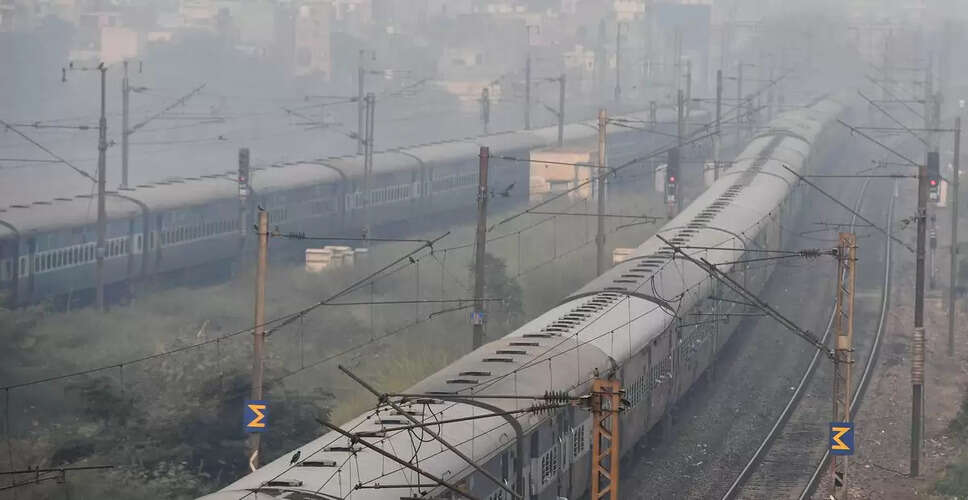
Severe Air Quality Issues in Ghaziabad
In November, Ghaziabad in Uttar Pradesh emerged as the city with the highest pollution levels in India, recording an alarming average PM2.5 concentration of 224 micrograms per cubic meter, as reported by a recent study from a prominent think tank.
PM2.5 refers to minuscule airborne particles that are approximately 30 times smaller than a human hair, posing serious health risks as they can penetrate deep into the lungs and enter the bloodstream.
The National Ambient Air Quality Standards of India set a permissible PM2.5 limit of 60 μg/m3 over a 24-hour period, while the World Health Organization recommends a much lower threshold of 15 μg/m3.
Following Ghaziabad, other cities such as Noida, Bahadurgarh, Delhi, Hapur, Greater Noida, Baghpat, Sonipat, Meerut, and Rohtak also ranked among the most polluted in the nation.
Uttar Pradesh had six cities on this list, with Haryana contributing three. Notably, all cities except Delhi experienced increased PM2.5 levels compared to the same month last year, according to the think tank's findings.
With the exception of Bahadurgarh, none of the top ten polluted cities managed to stay within the safe limits established by the National Ambient Air Quality Standards.
Manoj Kumar, an analyst from the think tank, noted that 20 out of 29 cities in the National Capital Region reported higher pollution levels than the previous year, despite a notable decrease in stubble burning activities.
He emphasized that the primary contributors to pollution are ongoing sources such as transportation, industrial activities, power generation, and other combustion processes. Without targeted emission reductions in these sectors, cities will continue to exceed pollution standards.
This aligns with a previous study conducted by a non-profit organization, which indicated that local pollution sources, rather than agricultural fires, were chiefly responsible for the deteriorating air quality in Delhi ahead of the Diwali festival.
In November, Shillong, the capital of Meghalaya, was identified as the least polluted city in India, with an average PM2.5 concentration of just seven micrograms per cubic meter, according to the same report.
Among the ten least polluted cities, six were located in Karnataka, while one each was found in Meghalaya, Sikkim, Tamil Nadu, and Kerala.
Air quality in Delhi typically worsens during the winter months, and this year has been no exception, with the capital frequently classified as the world's most polluted capital. Since mid-October, Delhi has consistently recorded air quality in the 'poor' or worse categories.
To combat pollution, measures outlined in stages 1 and 2 of the Graded Response Action Plan are currently being implemented in Delhi.
Stage 2 measures include ensuring a stable power supply to reduce reliance on diesel generators and increasing parking fees to limit private vehicle use. Stage 1 involves actions like mechanical road cleaning and water sprinkling to minimize dust, along with restrictions on certain construction and demolition activities.