
Exploring the Impact of Psychological Priming in Indian Society
This article delves into the concept of psychological priming and its impact on behavior in Indian society. Through recent incidents involving journalists and cricketer Jemimah Rodrigues, it highlights how external cues can shape perceptions and reactions. The discussion raises important questions about the intersection of sports, religion, and societal attitudes, urging readers to reflect on the underlying factors that influence our thoughts and actions. Discover the complexities of human behavior and the subtle ways in which our experiences shape our beliefs.
| Nov 4, 2025, 22:29 IST
The Influence of Psychological Factors on Behavior
Recently, discussions surrounding psychology and social behavior in India have highlighted an intriguing example that illustrates how our thoughts and reactions can be unconsciously swayed by external cues. A report published in 'The New Yorker' in 2017 revealed that a supermarket increased its soup sales by displaying a sign stating "12 per person." This phenomenon is known in psychology as ‘anchoring’ and ‘priming.’
Interestingly, the effects of ‘priming’ can be observed even when individuals are unaware of the changes in their behavior. In India, a recent incident in Delhi further exemplified this psychological concept. In July, two journalists traveling from Delhi to Kochi encountered a minor error in their ticket names.
However, CISF guards at security allowed one journalist to pass while stopping the other. The only difference in their names was a single letter; one was Siddharth Varadarajan, and the other was Ziya Us Salam. One was Hindu, and the other was Muslim. Following this, Varadarajan posed a question similar to those asked in psychological experiments: “Consider who was allowed to enter?”
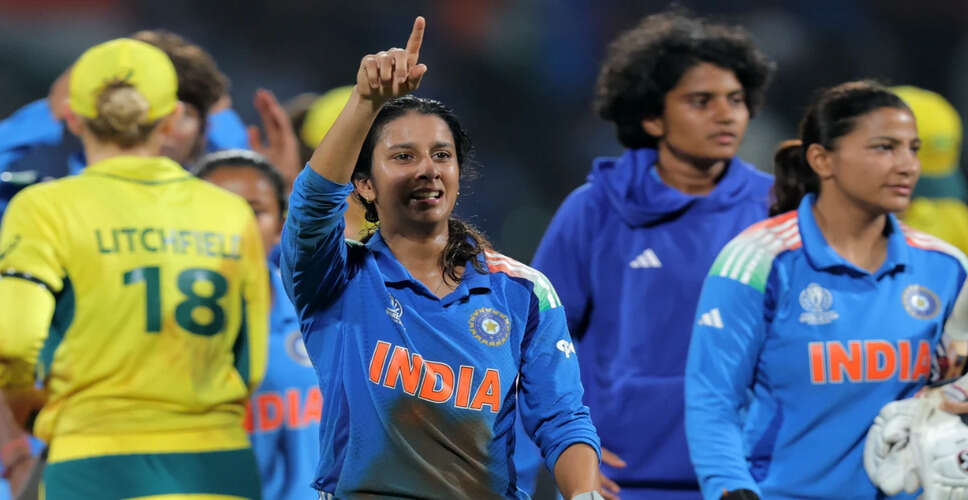
Similarly, the recent performance of Indian cricketer Jemimah Rodrigues and the controversies surrounding her have reignited this debate. Rodrigues scored an unbeaten 127 runs in the World Cup semi-final against Australia, earning her the Player of the Match title. After the match, she emotionally recounted her challenging journey and openly discussed her faith in God.
Despite her commendable performance, Rodrigues faced backlash on social media for thanking Jesus. Reports indicate that her father was accused of conversion in 2024, leading to the cancellation of his club membership.
This incident has sparked a resurgence of religious hatred and controversy on social media. While some praised Rodrigues, others attempted to link her to “religious politics.” Many argued that sports should remain separate from politics, yet the question persists: what drives us toward such thinking?
It is evident that the thoughts circulating in our society, media, and minds—whether related to a post or a sports performance—are inadvertently being ‘primed’ by our experiences and beliefs. Therefore, understanding what we think and why we think it has become crucial, as it ultimately determines the direction we are heading.