
Environmental Concerns Rise Over Hydroelectric Projects in Arunachal Pradesh

Concerns Over Hydroelectric Developments
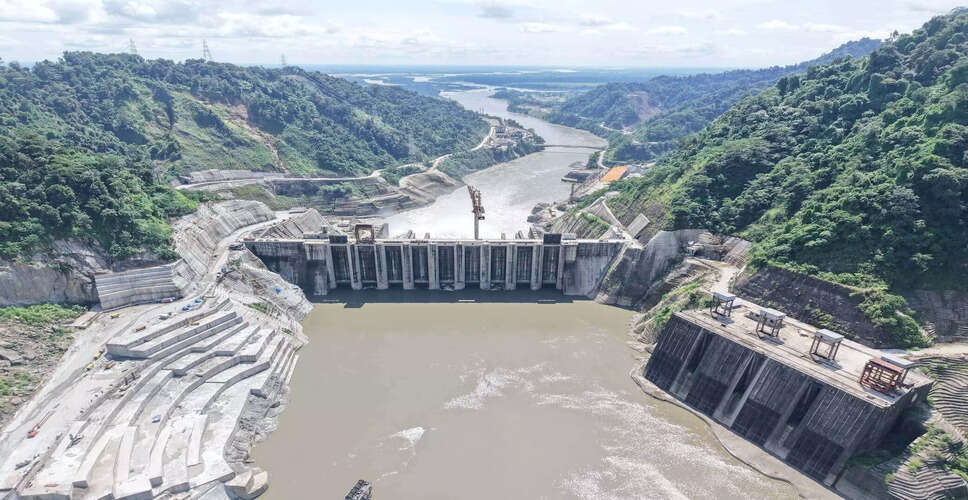
A file image of Subansiri Lower Hydroelectric Project (SLHEP). (AT Photo)
GUWAHATI, May 24: The recent decision by the Centre to halt new hydroelectric projects in Uttarakhand has garnered praise from environmental advocates. However, this shift contrasts sharply with the ongoing push for extensive power generation initiatives in Arunachal Pradesh.
Despite similar environmental concerns regarding large dams in both regions, the Centre has approved significant funding for two major projects in Arunachal Pradesh, amounting to Rs 40,150 crore for the Kamala Hydroelectric Project (1,720 MW) and the Kalai-II Hydroelectric Project (1,200 MW).
The operational 2,000-MW Subansiri Lower Hydroelectric Project and the upcoming 2,880-MW Dibang Multipurpose project, which is set to be the tallest in India at 278 meters, are also noteworthy developments, with completion expected by 2032.
Even more ambitious is the proposed 11,000-MW Siang Upper Multipurpose Project, which would become the largest hydroelectric dam in the Indian subcontinent upon completion.
Environmentalists highlight the stark contrast in the Centre's approach to these two Himalayan states. A joint affidavit from the Union ministries of Environment, Jal Shakti, and Power presented to the Supreme Court outlines critical issues such as disaster risks, river health, geological stability, and biodiversity loss associated with dam construction.
The affidavit emphasizes that the environmental risks outweigh the economic benefits of hydroelectric power generation. Concerns similar to those raised about Uttarakhand are also relevant for Arunachal Pradesh, according to Himanshu Thakkar, coordinator of the South Asia Network on Dams, Rivers & People.
Thakkar warns that the risks posed by large dams in Arunachal Pradesh could be exacerbated due to the region's seismic activity and its status as a biodiversity hotspot with diverse ethnic communities.
He argues that the same caution applied to halt new dams in Uttarakhand should be extended to Arunachal Pradesh, criticizing the Centre for its apparent double standards in promoting large projects in the latter while restricting developments in the former.
Thakkar, who has extensive experience in the water and environmental sectors, noted that the Centre only made modifications to the Subansiri Lower project after significant public protests.
He pointed out that the Centre's insensitivity was evident during protests in Arunachal Pradesh and previously in Uttarakhand, where mass protests followed by a disaster in 2013 highlighted the dangers of dam construction. Even after Supreme Court intervention, it took years for the Centre to recognize the detrimental impacts of dams on rivers and communities.
In contrast to the large-scale projects in Arunachal Pradesh, the Power Ministry's recent proposals for Uttarakhand have been relatively modest, suggesting seven projects with a combined capacity of over 2,150 MW, while the state currently has an installed hydropower capacity of approximately 3,855 MW.
Arunachal Pradesh is envisioned by the Centre as a key power hub, expected to harness 40% of India's total hydropower potential, estimated at over 58,160 MW across eight major river basins, with 19,000 MW targeted for realization in the next decade.