
Election Commission Enforces Silence Period Ahead of Bihar Assembly Polls
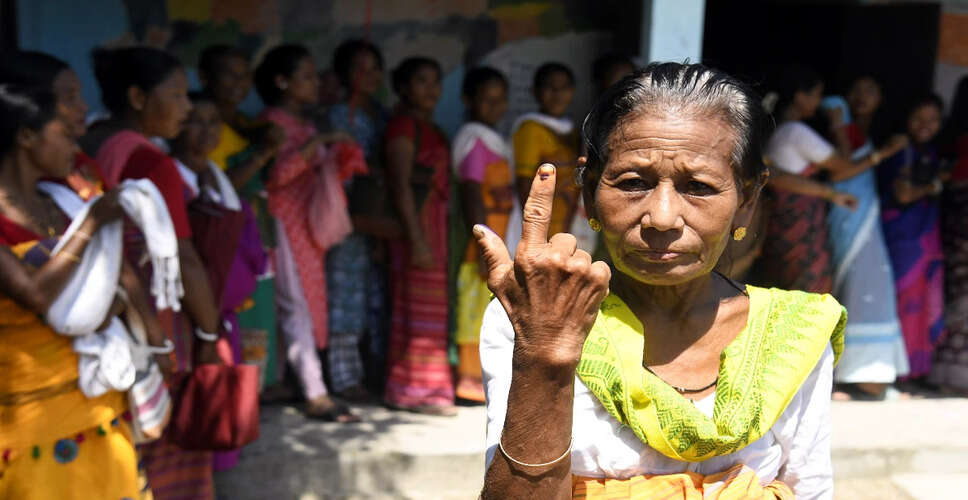
Election Commission's Reminder on Silence Period
On Sunday, the Election Commission of India (ECI) issued a reminder to media outlets and broadcasters regarding the mandatory silence period before voting in the Bihar Assembly elections and by-elections. Voting will occur in two phases on November 6 and November 11. According to Section 126(1)(B) of the Representation of the People Act, any election-related content broadcasted through television, radio, or similar media is prohibited during the 48 hours leading up to the end of voting. The commission emphasized that television and radio channels, along with cable networks, must ensure that no content is aired that could be perceived as promoting or biasing any party or candidate.
Voting Schedule and Political Dynamics
The first phase of voting in Bihar is set for Thursday, November 6, where the ruling National Democratic Alliance (NDA) aims to maintain its hold on power, while the Grand Alliance seeks a strong comeback in the elections. This phase will cover 121 constituencies across 18 districts, with a total of 1,314 candidates contesting and approximately 375,000 voters expected to cast their ballots. As the official campaigning comes to a close, the question arises about the activities of political party workers on this crucial day.
Distribution of Party Kits
One of the primary responsibilities of party workers is to distribute essential kits to booth presidents. These kits include the voter list for the specific ward, the candidate's name, photo, party name, election symbol, party flag, and some last-minute campaign materials. Additionally, the kit contains a form that must be submitted to the returning officer, which is used for appointing polling agents at the voting center. The kit also includes an allowance provided by the party, which can range from 500 to 1,500 rupees.
Selection of Polling Agents
On this day, booth presidents select polling agents. They inform the chosen local individuals about the polling agent process inside the voting center. The selected polling agent must submit the form included in the kit to the returning officer before voting begins. These agents are authorized on behalf of the candidate and are responsible for closely monitoring fair voting at the booth. Before the voting starts, agents also participate in a mock poll on the Electronic Voting Machine (EVM).
Strategic Adjustments by Workers
The silence period allows party workers to revise their strategies for election day. With campaigning concluded, most voters have likely made their choices regarding their preferred party or candidate. Workers focus on ensuring that their dedicated voters make it to the polling stations, including encouraging those who typically show indifference towards voting.
Voter Slip Distribution
When heading to vote, individuals need a voter slip to verify their identity and locate their name on the voter list at the polling center. Typically, Booth Level Officers (BLOs) deliver these slips to homes. However, if some voters do not receive their slips, a party booth president ensures that these slips are printed and distributed, sometimes even outside the polling center on election day.
Monitoring Opponent Activities
Amidst these responsibilities, workers remain vigilant against the opposition. They monitor to ensure that rival members do not influence voters with last-minute promises or temptations. It is crucial to ensure that no one misleads the public or attempts to buy votes, as fair conditions for all candidates until voting concludes are essential for a transparent election.
Bihar Assembly Elections 2025
Earlier this month, the Election Commission announced the schedule for the Bihar Assembly elections. Voting for the 243 assembly seats will take place in two phases on November 6 and November 11, with the counting of votes set for November 14. The NDA, led by the BJP and JD(U), will face off against the RJD, led by Tejashwi Yadav, along with the Congress, CPI(ML), CPI, CPM, and Mukesh Sahni's Vikassheel Insaan Party (VIP). Prashant Kishor's Jan Suraj Party has also fielded candidates for all 243 seats in the state.