
Delhi's Air Quality Remains Poor Amidst Cold Weather
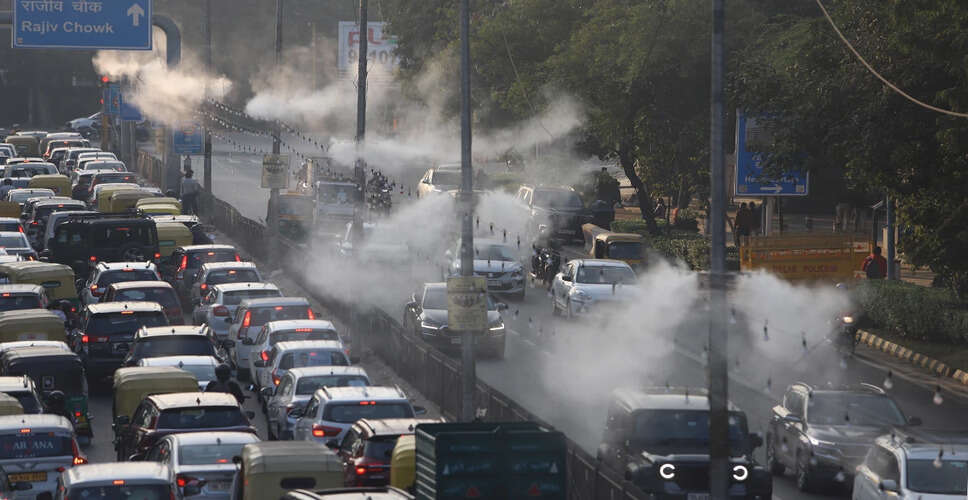
Smog Covers Delhi
On Sunday, a thick layer of smog enveloped the national capital, Delhi. The air quality remained in the 'very poor' category, with an average Air Quality Index (AQI) recorded at 305, slightly lower than the previous day. Additionally, the city continued to experience severe cold, with temperatures dropping below 10 degrees.
Where is Pollution Highest?
According to data from the Central Pollution Control Board (CPCB) at 7 AM, the highest pollution levels were observed in Mundka, where the AQI reached 365. Out of 39 monitoring stations across Delhi, 26 reported air quality in the 'very poor' category, while the remaining 13 stations indicated 'poor' levels.
Areas with 'Very Poor' Air Quality
The areas that recorded 'very poor' air quality (AQI 301-400) included Mundka (365), Bawana (352), Rohini (341), Wazirpur (337), RK Puram (326), Anand Vihar (327), Ashok Vihar (325), Punjabi Bagh (320), Siri Fort (318), Chandni Chowk (308), and Vivek Vihar (304).
Locations with 'poor' air quality (AQI 201-300) comprised Alipur (282), Aya Nagar (263), IGI Airport (227), and Mandir Marg (212).
Air Quality Trends This Week
Delhi's air quality fluctuated throughout the week. It decreased from 327 on Saturday to 305 on Sunday. Earlier in the week, it peaked at 372 on Tuesday, marking the highest level in the 'very poor' category.
Local Factors Contributing to Pollution
As per the Decision Support System established for managing air quality in Delhi, the primary contributor to pollution was transportation, accounting for 14.8%. This was followed by industries in Delhi and surrounding areas (7.3%), residential sources (3.6%), and construction activities (2%). In neighboring NCR districts, contributions were noted at 13.9% from Jhajjar and 5.2% from Rohtak.