
C. Joseph Vijay's Bold Start as Tamil Nadu's Chief Minister
C. Joseph Vijay's inauguration as Tamil Nadu's Chief Minister marks a significant shift in the state's political landscape. His disciplined approach and swift actions, including the closure of TASMAC outlets near sensitive areas, reflect his commitment to governance. However, challenges loom as he navigates the complexities of leadership. Discover how Vijay's early decisions are shaping the future of Tamil Nadu.
| Jun 9, 2026, 16:32 IST

A Dramatic Entrance into Tamil Cinema and Politics
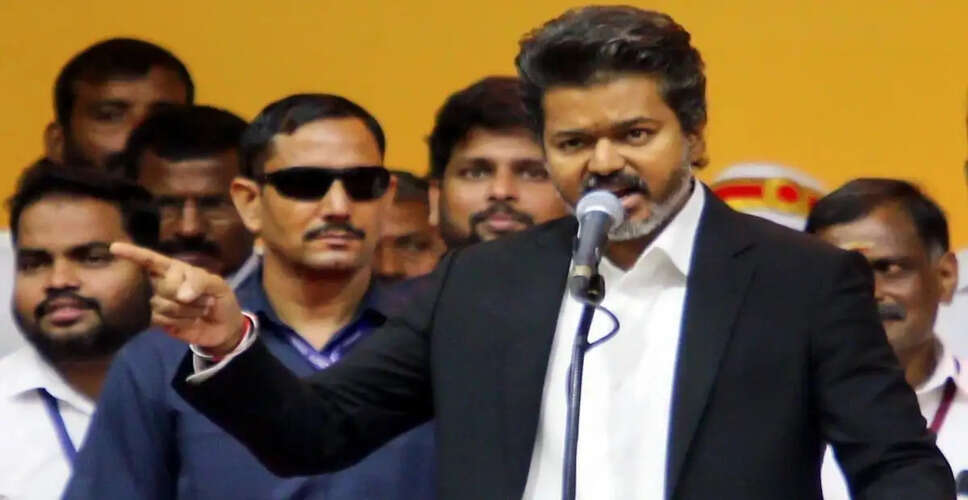
The entrance of a hero in Tamil cinema is often marked by grandeur and intensity, and this was mirrored in real life when C. Joseph Vijay took the oath as the ninth Chief Minister of Tamil Nadu on May 10. Transitioning from actor to politician, Vijay managed to dismantle the long-standing Dravidian dominance that has ruled the state since 1967, securing a mandate that seems almost scripted. However, just a month into his tenure, challenges have emerged: while his ambitions are clear, significant setbacks have also surfaced.
Exemplary Discipline at the Helm
Exemplary Discipline at the Helm
One of the most talked-about aspects of Vijay's early days in office is not policy-related. His punctuality at the Chief Minister's office, dressed in a black suit and white shirt—deliberately distinct from the traditional white dhoti—sends a subtle yet powerful message before he even speaks. From Monday to Friday, he dedicates a full seven hours at his desk, enforcing strict administrative timekeeping for his staff. Reports indicate that he brings his own lunch and quietly eats in his cabin. While these gestures might be dismissed as mere show, in a system where top-level signals carry weight, they are hard to overlook.
Addressing Alcohol and Women's Safety
Addressing Alcohol and Women's Safety
Among his initial significant decisions was the directive to close 717 government TASMAC outlets located within a 500-meter radius of places of worship, educational institutions, and bus stands. This move, which affects 276 outlets near religious sites, 186 near schools and colleges, and 255 near bus terminals, fulfills a central commitment from TVK's manifesto and was executed within the stipulated fortnight.