
The Trailblazing Journey of Kamala Sohonie: India's First Female PhD in Science
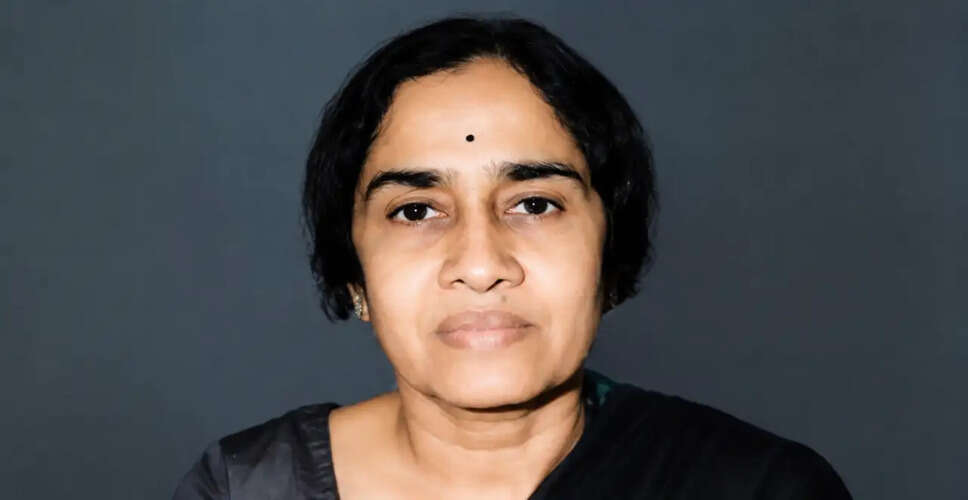

A Pioneering Spirit in Science
In the summer of 1933, a remarkable young woman, Kamala Bhagwat, who had graduated with a first-class degree in chemistry from Bombay University, found herself waiting outside the office of Sir C.V. Raman, India's first Nobel laureate in science. Despite her impressive academic record, her application for a research fellowship at the Indian Institute of Science in Bangalore had been rejected. Undeterred, she chose to wait, day after day, for a change of heart from Raman.
Eventually, he did relent, allowing her to join on a probationary basis, albeit with conditions that denied her the status of a regular student. This decision marked the beginning of a significant shift in the landscape of Indian science.
Kamala's Early Life and Challenges
Who Was Kamala Sohonie?
Born in 1911 in Indore to a family of chemists, Kamala was well-versed in the language of science. Both her father and uncle had attended the IISc, and by the time she graduated in 1933, she had topped her class. However, her gender posed a barrier in a male-dominated field.
Raman's rejection of her application was based solely on her being a woman, as he believed that women lacked the temperament for serious scientific inquiry.
The Determined Pursuit of Knowledge
Kamala's Relentless Spirit
After receiving her rejection, Kamala traveled to Bangalore and refused to leave the institute. She described her actions as a form of 'satyagraha,' quietly occupying the corridor outside Raman's office without any public protest. Her persistence eventually led Raman to admit her, but under humiliating conditions that required her to remain inconspicuous while proving her worth.
Despite these challenges, she completed her work in just nine months.
A Legacy of Achievement
From Bangalore to Cambridge
Following her time in Bangalore, Kamala moved to Cambridge, where she completed her doctoral thesis on cytochrome C in plant tissues in an impressive fourteen months. She returned to India in 1939, holding a qualification that no other Indian woman had achieved before her.
Rather than focusing on her grievances, she dedicated her life to building institutions. She worked at the Nutrition Research Laboratory in Coonoor, led the biochemistry department at Lady Hardinge Medical College, and became the first female director of the Royal Institute of Science in Bombay.
Her most significant contribution was in the study of neera, the unfermented sap of palm trees, which she proved to be rich in essential vitamins and minerals. This work earned her the Rashtrapati Award and helped nourish countless children and pregnant women in underserved regions.
By the end of his life, Raman had begun to admit women into the IISc regularly, a change influenced by Kamala's steadfast determination. She passed away in 1998 while being honored by the Indian Council of Medical Research, leaving behind a legacy that transcends her initial struggles.
The story of Kamala Sohonie is not merely about a woman waiting on a bench; it is a testament to the impact one determined scientist can have on an entire nation.