
The Importance of Pre-Marital Health Screening: A Focus on Thalassemia

Understanding Pre-Marital Health Screening
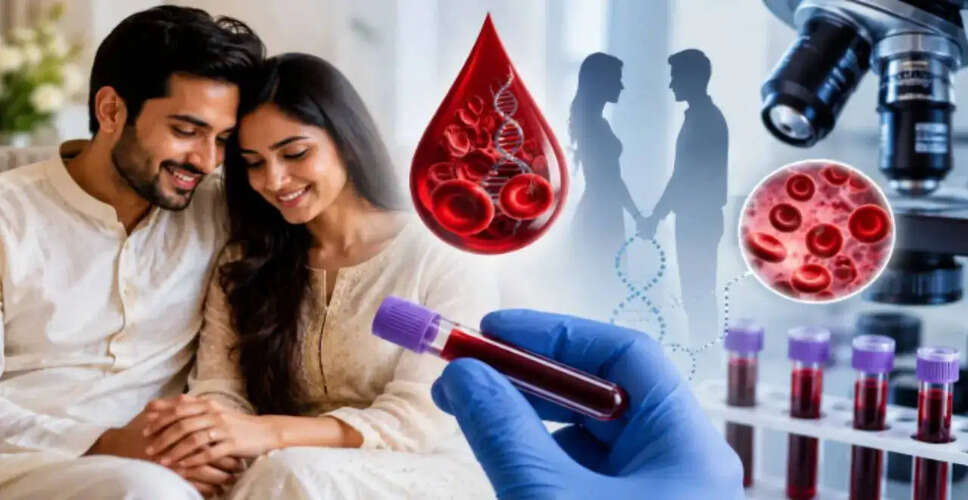
Marriage signifies the start of a new phase in life, and health professionals suggest that it should also mark the beginning of a couple's journey towards making informed healthcare choices. While pre-marital health assessments are gaining popularity, experts highlight the significance of a straightforward blood test that can help avert a serious inherited condition affecting numerous families in India annually: thalassemia. According to specialists, pre-marital screenings aim to empower couples with knowledge rather than instill fear, enabling them to protect future generations from avoidable health issues. Dr. Rahul Bhargava, Principal Director of Hematology and Bone Marrow Transplant at Fortis Memorial Research Institute, stated, "Among the various pre-marriage tests, thalassemia screening is crucial due to its potential to prevent an inherited blood disorder in offspring."
Why is Pre-Marital Health Screening Essential?
Importance of Comprehensive Screening
Modern pre-marital health screenings extend beyond basic fitness evaluations. Comprehensive packages typically assess blood health, diabetes risk, thyroid function, liver and kidney health, nutritional deficiencies, blood group compatibility, and infectious diseases like HIV, Hepatitis B, Hepatitis C, and syphilis. Among these tests, thalassemia screening is particularly vital. Medical professionals assert that a simple blood test can determine if an individual carries the thalassemia gene. Carriers often appear healthy and may not show symptoms, making the condition challenging to detect without testing. Thalassemia is often termed a 'silent killer' because carriers may remain unaware of their status unless tested. If both partners are carriers, there is a 25% risk that each pregnancy could result in a child with thalassemia major, the severe form of the disorder.
What is Thalassemia?
Understanding the Disorder
Thalassemia is a hereditary blood disorder that impairs the body's ability to produce healthy hemoglobin, the protein responsible for oxygen transport in red blood cells. Individuals carrying a single thalassemia gene are referred to as carriers or those with thalassemia trait. They typically lead normal lives and may not realize they carry the gene. The concern arises when both partners are carriers, as each pregnancy has a 25% chance of resulting in a child with thalassemia major, the most severe variant of the disease.
The Seriousness of Thalassemia Major
Why Thalassemia Major is Critical
Children diagnosed with thalassemia major often require ongoing medical treatment, including frequent blood transfusions to survive. Over time, these transfusions can lead to excessive iron buildup in the body, necessitating specialized treatments to eliminate the surplus iron. This condition can also elevate the risk of:
- Heart complications
- Liver disease
- Bone deformities
- Growth delays
- Hormonal disorders
- Reduced quality of life
Beyond the physical challenges, the emotional and financial toll on families can be substantial.
The Positive Aspect: Simple and Affordable Screening
Accessible Screening Options
Healthcare professionals emphasize that thalassemia screening is straightforward and cost-effective. Tests such as a Complete Blood Count (CBC), hemoglobin electrophoresis, and HbA2 analysis can accurately identify carriers. If both partners are found to be carriers, genetic counseling can provide them with insights into their reproductive options, enabling informed family planning decisions.
Raising Awareness Can Save Lives
The Importance of Awareness
India continues to see a significant number of thalassemia cases each year, making awareness and preventive screening crucial. Experts assert that a simple blood test prior to marriage can prevent years of emotional distress, medical complications, and financial burdens. More importantly, it empowers couples to make informed decisions about their future family. Dr. Deepak Sanghavi, Senior Vice President Operations and Chief of Mumbai Reference Lab at Agilus Diagnostics, noted, "Conditions like anemia, iron deficiency, hormonal imbalances, diabetes, liver or kidney dysfunction, and vitamin deficiencies may go undetected for years, impacting metabolic processes, energy levels, fertility, and overall health. A pre-marital health screening offers couples the opportunity to address any issues before tying the knot." While planning for marriage often centers around venues, ceremonies, and finances, health professionals urge couples not to overlook the significance of pre-marital screenings. A single blood test today could profoundly impact the next generation.