
Controversy Erupts Over Homoeopathy and Freedom of Expression in India

Introduction to the Controversy
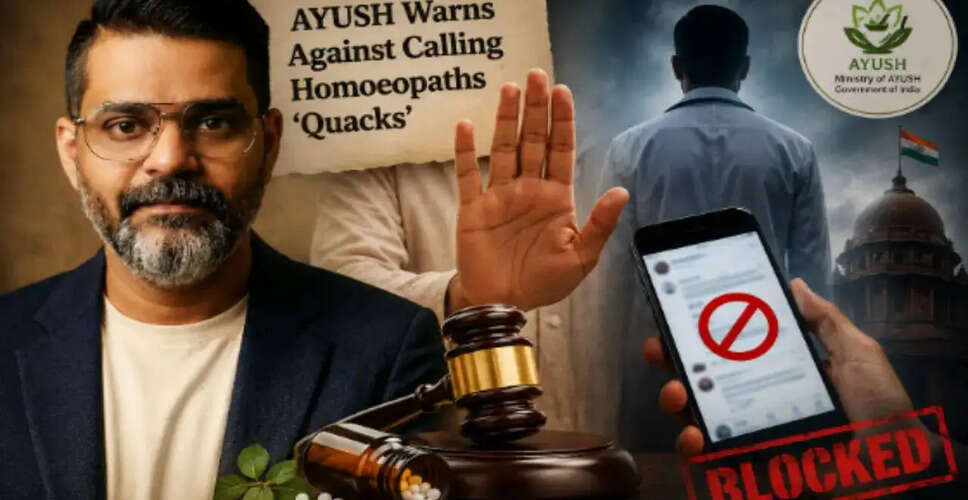
A recent controversy has sparked intense discussions within India's healthcare sector, centering on homoeopathy, medical critique, and the right to free speech. The issue arose when the Board of Ethics and Registration for Homoeopathy, a governing body under the National Commission for Homoeopathy, released a circular cautioning that labeling registered homoeopathic practitioners as 'quacks' could lead to defamation claims and legal repercussions. This announcement has ignited debates among medical professionals, public health advocates, and proponents of alternative medicine regarding the boundaries between legitimate criticism and defamation.
Details of the AYUSH Circular
What did the AYUSH circular say?
On June 8, the circular was issued, asserting that calling licensed homoeopathic practitioners 'quacks' in social media, media articles, public declarations, complaints, or legal documents could harm their professional standing and infringe upon their legal and constitutional rights. The regulatory body urged healthcare professionals and stakeholders to be cautious when discussing homoeopathy publicly. The notice advised against making statements that could be seen as defamatory, misleading, or biased. However, it did not clarify the potential legal ramifications of such comments or how authorities would assess whether criticism constituted defamation.
Response from The Liver Doc
The Liver Doc responds
The circular quickly prompted a reaction from Cyriac Abby Philips, a hepatologist known on social media as The Liver Doc. He took to Instagram to express his disapproval of the circular, emphasizing international scientific critiques of homoeopathy. His post included references to statements from medical organizations, peer-reviewed research, and public discussions questioning the efficacy of homoeopathic treatments. He cited positions from the British Medical Association and scientific literature that describe homoeopathy as lacking substantial clinical evidence. Additionally, he included a quote from Mahatma Gandhi: 'Never apologise for being correct.'
Instagram Post Blocked in India
Instagram post blocked in India
Shortly after his post went live, Dr. Philips reported that it had been restricted in India. Screenshots shared online revealed that Instagram informed him the content was unavailable in India due to legal obligations under the country's Information Technology regulations. This incident heightened concerns among healthcare professionals regarding content moderation and the freedom to discuss medical evidence and alternative medicine openly. Dr. Philips contended that his post did not amount to defamation, as it was based on published research and scientific consensus regarding homoeopathy. He stated, 'My post was not defamation. It quoted the British Medical Association, peer-reviewed research, and government-commissioned reviews from scientifically progressive countries and the global scientific consensus that homeopathy works for nothing. One cannot defame a pseudoscience by describing it accurately. But what happened is uglier - the national homeopathy regulator used a 'fascist media law' modified by the current government to silence its critics, and the social media platform (Instagram) obeyed within hours.'
The Ongoing Debate Surrounding Homoeopathy
The ongoing debate around Homoeopathy
Homoeopathy is officially recognized as a medical system in India and is overseen by the Ministry of AYUSH. Millions of individuals utilize homoeopathic remedies, and numerous licensed practitioners offer treatments nationwide. However, the system remains a topic of contention within the global scientific community. Critics assert that many homoeopathic remedies have not shown effectiveness beyond placebo effects in rigorous clinical trials. Conversely, supporters argue that patient experiences and years of usage validate its continued role in healthcare.
Importance for Public Health
Why does it matter for public health?
This controversy underscores a broader challenge in contemporary healthcare: finding a balance between scientific scrutiny, patient autonomy, professional respect, and freedom of expression. For patients, the essential takeaway is that medical choices should be grounded in credible evidence, qualified medical guidance, and informed discussions about the advantages and limitations of any treatment method.