
Explore Delhi's Historical Gems This Winter
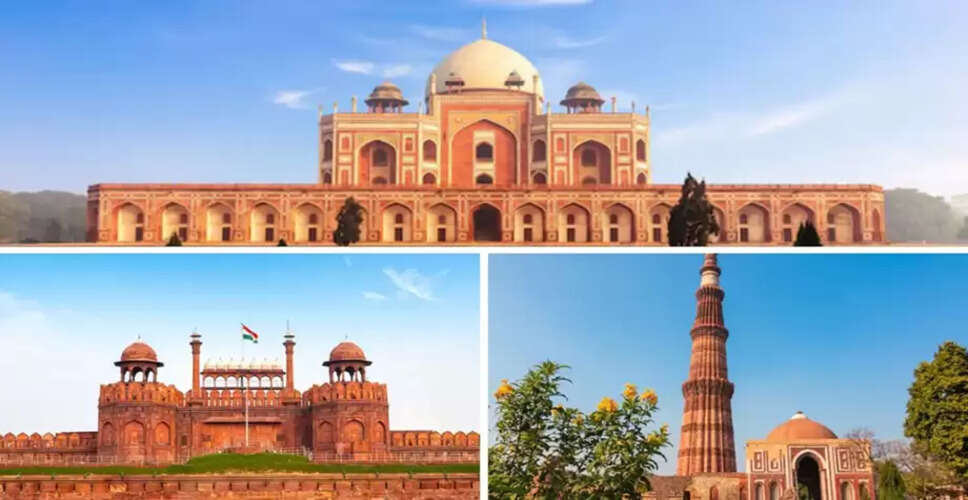
Discover the Rich Heritage of Delhi
As winter sets in, the allure of Delhi intensifies. This city is a treasure trove of historical significance, with stories embedded in every corner and stone. Hence, Delhi stands out as an exceptional destination for travelers.

If you're on the lookout for must-visit spots in Delhi, we have curated a list of historical landmarks that not only showcase remarkable architecture but also reflect India's rich heritage. Many of these sites are recognized as UNESCO World Heritage Sites. Let’s delve into these architectural marvels.
Red Fort: A Symbol of Power
Red Fort
This grand fort, constructed from red sandstone, is more than just a structure; it represents the might of India. Commissioned by Mughal Emperor Shah Jahan in 1639, it served as the capital of the Mughal Empire. The Red Fort exemplifies Mughal architecture, featuring a stunning fusion of Persian, European, and Indian styles. Notable structures within the fort include the Diwan-i-Aam, Diwan-i-Khas, Moti Masjid, and Rang Mahal, all contributing to its splendor. Additionally, this fort symbolizes India's freedom, as the Prime Minister addresses the nation from here every Independence Day.
Qutub Minar: A Marvel of Islamic Architecture
Qutub Minar
Situated in South Delhi, the Qutub Minar complex is a prime example of early Islamic architecture in India. Standing at 73 meters, it holds the title of the tallest brick minaret globally. The construction began in 1193 under the reign of Qutub-ud-din Aibak, the first Muslim ruler of Delhi. A standout feature of the complex is the Iron Pillar, which has remarkably resisted corrosion for over 1,600 years, showcasing the brilliance of ancient Indian metallurgy. The Qutub complex also houses significant monuments like the Quwwat-ul-Islam Mosque and the Alai Darwaza.
Humayun's Tomb: A Garden of Serenity
Humayun's Tomb
Humayun's Tomb is a distinguished example of Mughal architecture, constructed in 1565 by Hamida Banu Begum, the spouse of Mughal Emperor Humayun. It was the first garden-tomb in India, setting a precedent for a new architectural style. The design follows the Persian Charbagh layout, dividing the garden into four sections with the tomb at its center. Built from white marble and red sandstone, this structure later inspired the design of the Taj Mahal. The complex is the final resting place of Humayun and several other members of the Mughal dynasty, earning it the title "Dormitory of the Mughal Dynasty."
Stay Connected
PC Social Media