
UN Highlights Crisis in Afghanistan's Education for Girls
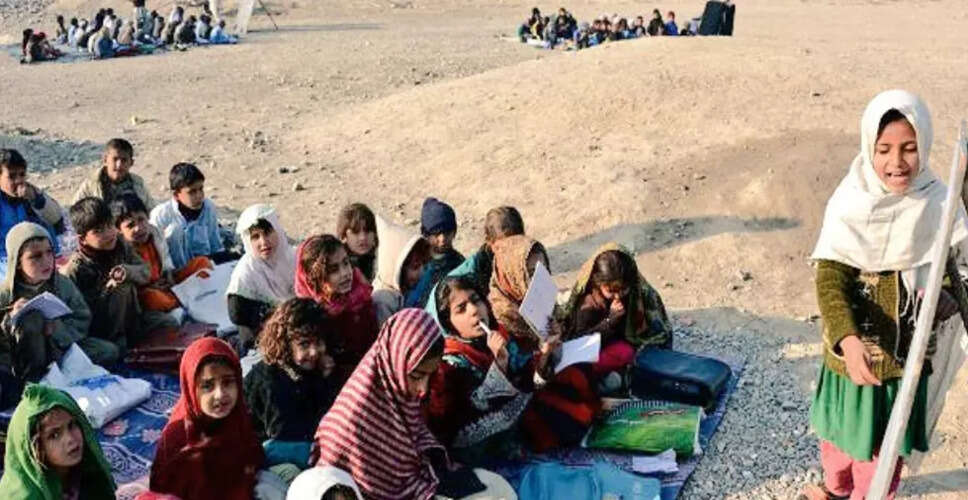

UN Warns of Educational Crisis in Afghanistan
Representational Image
Kabul, June 9: The United Nations has issued a stark warning regarding the future of Afghanistan, indicating that the country is on the verge of producing a "lost generation" as approximately 3.8 million girls remain out of school due to the Taliban's restrictions, as reported by local media on Tuesday.
During a session of the UN Security Council on Monday, Georgette Gagnon, the Acting head of the UN Assistance Mission in Afghanistan (UNAMA), revealed that around 3.8 million girls aged between seven and 18 are currently out of school. This includes over 2.6 million adolescent girls who have been barred from secondary education, according to Afghan news agency Khaama Press.
Gagnon highlighted that each year, about 250,000 additional girls are prevented from accessing secondary education. She emphasized that the ongoing restrictions on women and girls will have lasting repercussions on Afghanistan's social and economic progress.
Furthermore, Gagnon noted that Afghanistan has displayed minimal signs of economic recovery, with stagnant growth and insufficient revenue generation. She projected that up to 2.8 million Afghans might return from neighboring countries in 2026, which will exacerbate the challenges faced by a population already grappling with unemployment, poverty, and inadequate public services.
The UN estimates that by 2026, around 21.9 million individuals will require humanitarian aid. Edem Wosornu, the Director of Crisis Response at the UN Office for the Coordination of Humanitarian Affairs (OCHA), reported that 4.7 million people are at risk of severe food insecurity, while 3.7 million children are suffering from acute malnutrition. She pointed out that humanitarian efforts are being hampered by a lack of funding.
Since the Taliban took control of Afghanistan in 2021, they have enforced numerous restrictions on women and girls, including barring girls from attending secondary schools beyond the sixth grade, prohibiting women from enrolling in universities, and imposing limitations on employment and access to public spaces.
On June 4, the Taliban conducted the third round of university entrance exams in Kabul, which once again excluded girls for the fourth consecutive year. The Taliban-run National Examination Authority began the Kankor exams on June 4, with thousands of candidates participating at Kabul University, as reported by Khaama Press. This examination was specifically for 12th-grade graduates from Kabul province.
Rahimullah Haqqani, the administrative and technical deputy head of the National Examination Authority, stated that over 110,000 candidates had participated in the first three rounds of examinations held in Afghanistan.
Earlier in March, the new academic year commenced in Afghan schools without girls returning to classrooms above the sixth grade for the fifth consecutive year.